Kvinnelige prester. Dialogen · Del 50
She was seven when she knelt down twice, in case God had not understood her the first time. Forty-four years later she leads some twenty-nine thousand Presbyterians in metropolitan Atlanta, and says the problem does not rest on Paul alone.
Av Maria Solbak Årnes · Video conversation with the Rev. Dr. Aisha K. Brooks-Johnson, Executive Presbyter of the Presbytery of Greater Atlanta, Presbyterian Church (USA) · Interview by video at 30. september 2026 · Published 8. October 2026
Where she is
MARIA Tell me briefly where you are in life and where you are serving.
I am the Executive Presbyter for the Presbytery of Greater Atlanta. If you are not Presbyterian: there is the local Presbyterian church, then the presbytery, then the synod, then the General Assembly. We are part of the Presbyterian Church USA. I am the leader and head of staff of this mid-council. Numerically, the Presbytery of Greater Atlanta is probably the largest, with about twenty-nine thousand Presbyterians far and wide in the metro Atlanta area. Our offices are on the campus of Columbia Theological Seminary, which is a new move for us.
Where I am in life as a woman in ministry: I am married for the second time. I was widowed in 2018 and remarried in 2021. I am a mother to three children, two bonus daughters and one son that I brought to the marriage. I am a Mimi, a grandmother. We help raise our granddaughter. My husband is also a Presbyterian minister who works for the national church and serves as a part-time pastor in a local congregation. My mother lives with us as well.
I just finished my Doctor of Ministry in spiritual direction, and I use those practices in working with leaders. I find myself serving and encouraging the church in all of its changes and iterations. And squeezing in lunch in between meetings.
Presbyterian ordination requires an undergraduate degree and a Master of Divinity. She had just finished the doctorate. It requires a lot of education, she said, a lot.
We belong to each other
MARIA Did you grow up in a Christian home?
I grew up at a Baptist church in a predominantly black neighbourhood. It was a small church, and the pastor was white. I believe he had come from Presbyterian origins, but was serving a small Baptist church. From there we went to a large non-denominational type of Baptist church.
I have been a person of faith, being able to speak it on my own, since about seven.
MARIA What were you thinking about at seven?
Sunday school told us that Jesus died for our sins, that Jesus loved us very much and wanted to have a relationship with us. And I went home and I got on my knees and I said: Jesus, come on and live in my heart. That is what the lady said in Sunday school class.
So I stood up, and I thought: oh my gosh, what if the Lord didn't understand what I was saying? So I got back down on my knees and I said: now listen, we belong to each other. I belong to you. You belong to me. Got it?
Now listen, we belong to each other. I belong to you. You belong to me. Got it?
A husband with one wife
MARIA Did you feel you had a calling to be ordained?
When I was a teenager, I was being raised in a tradition that said a woman could only be a Sunday school teacher or a missionary. So I thought I would be a missionary, on short-term mission trips.
My first husband went to a small family church that was more Pentecostal, and they believed in women preachers in a way that my non-denominational Baptist church did not. So my husband at the time was like: what are you talking about, of course women can preach. And I said: no, they can't.
MARIA Where did that come from?
In a Sunday school class, the teacher was reading through one of the epistles for the qualifications of a pastor, where it says you have to be a husband with one wife. As an adult, I see that the emphasis is on the not-plural: marriage. That the leader has to look different from the culture, which had multiple wives. That is the contextualisation of the passage for me. Not the gender specificity of it.
But the teacher said: well, right here it says, in order to be a pastor you have to be a husband with one wife. So therefore you can't be a pastor if you are a woman. I thought to myself, okay, but I wasn't completely sold on this rationale.
If women had to speak on Missionary Sunday, there was a different place to speak from. Not the pulpit. So the visual optics, from the time I was a child, of no women in the pulpit, also sends a message. Or to say from the pulpit: yes, we had some women preachers in our leadership class, and I let them know that we don't believe in that here, but I still let them learn from my leadership class.
It was that particular indoctrination.
So therefore you can't be a pastor if you are a woman.
Saying yes in Jackson
MARIA When did that change?
I did not reconcile it until I was in college, and friends of mine were going to go to seminary. They said: we are leaving our job at this Presbyterian church. You should come with us on a mission trip focused on racial reconciliation. And two, you should apply to be the middle school youth director.
And the family pastor at the time, who is still a dear friend to this day, said: you will have to reconcile what you believe the scriptures say about women. Because you are going to be their pastor. These middle school kids will see you as their pastor.
So on that trip in 1998 in Jackson, Mississippi, at the Seven Last Words Good Friday service, I said: Lord, if you really need me to work with these white kids in the suburbs, I'll do it. If that's what you need.
It was saying yes to non-ordained full-time ministry that opened the door for my heart to be open. Because if that interpretation of women not preaching was correct, then I was crazy. But if it's wrong, then I'm not. And we know I'm not crazy.
While I do not agree with the idea of excluding women from ministry, I respect those who still hold that view to this day. We're just not in the same spaces. If I exist, as a woman, as a black woman, as a minister, then we can be friends. So I still love that faith family very deeply. But we don't view scripture the same way.
I had to use my own life to crack open the scriptures and say: if in Joel chapter two it says, I pour out my spirit on all flesh, my sons and my daughters, either that's true or it's not.
Either that's true or it's not.
The stained glass ceiling
MARIA What is the theological reason for not letting women speak from the pulpit?
You are asking me for theological reasons, and I think they are patriarchal reasons.
Not seeing women as equal to men in all things is patriarchy embedded in theology, embedded in church history. That's just what I think it is. Period. And it's sugarcoated and served up real nice.
Even places that do affirm women in leadership don't always treat women fairly. Because the hatred of women is a real sin. No different from hatred of other racial groups or other class distinctions. The disdain for another human based on something you can see, or label, is sin to me. But to other people, that's what they've been taught. So I don't argue.
MARIA What does it look like when women are not treated fairly, even where they are allowed to be pastors?
Questioning. Questioning, not in a constructive way. Sometimes there can be microaggressions, or belittling, or having people doubt who they are. A woman says something in a meeting and people don't want to do it. A man says the same thing: oh yeah, that's a great idea, we should do that. Or if a woman puts up boundaries, and the male pastor does the same thing, they get treated differently.
I'm always going to tie it back to patriarchy. So if that's not somebody's framework, if they don't believe there is a systemic disdain and hatred towards women historically, then this may be hard for somebody to hear.
MARIA Have you experienced it yourself?
Google a stained glass ceiling. When women talk about a glass ceiling, about being able to live and be their full selves in corporate or other industries, they mean that there is a limit, a cap to their full flourishing and productivity in their particular role. Women in ministry will talk about a stained glass ceiling, where you may be in a position of leadership or influence, and yet you can still be undermined. And not just by men.
There are other women who don't want to be led by women. There are women who prefer to have a man in the pulpit. There are women who don't want to be told what to do by other women.
For me, what I have personally experienced is the power dynamics of people second-guessing where you feel God is calling or leading. As a woman in ministry, it doesn't mean that you should be immune to being challenged or questioned by your congregation. But sometimes people challenge women in a way that they do not challenge men by talking over them, not listening, or repeating what a woman said in a meeting or conversation.
Women in ministry will talk about a stained glass ceiling.
MARIA And when it happens to you?
I have plenty of male colleagues who can resonate, just as leaders, with people questioning, demeaning, derailing movement and growth in a church. Some of that has nothing to do with gender. Sometimes people are just hard on leaders.
But if I add the layer up, what it means to be a woman, and for me a woman of colour in predominantly white spaces, I always have to be mindful of what somebody is trying to derail. At fifty-one, it probably doesn't get under my skin. Yes, it does. It still gets me. Because you have to navigate in a way where you don't isolate.
I usually use a term: I don't let it live in my skin. If somebody is having a hard time with me as a leader, for whatever reason, gender notwithstanding, my question is: how can I help this person get in touch with what's hard for them? What is hard for them about my particular leadership style? Is it the skin I'm in? Is it the approach that I take? How can I help them? If I can. I might not be able to.
I don't let it live in my skin.
The infallible word
MARIA What is the Bible to you? Some read it word for word as directly from God, and some say the people who wrote it were inspired.
In our context, the language of infallibility: that the truth of what it says about God stands on its own. The language in scripture about it being God-breathed, and for instruction, and a lamp to my feet and a guide to my path.
It is important to understand the category of scripture I am reading, when I am reading it. What is the law? What are the prophets? What is wisdom literature? What are epistles? What is the gospel? I am going to read a biography a particular way. I am going to read history a particular way. Understand what you are reading, and what is God's truth in that story.
When kingdoms fall. When people want to worship a calf instead of God alone. When brothers throw another brother down a ditch. There are so many beautiful stories, and I believe that they are our spiritual ancestors. It is a story of God at work in the life of humanity. God's saving work.
It's sacred. It's holy. It's a gift. It's how we make sense of God revealed in the world. Jesus Christ is the word made flesh. The Spirit helps us intercede. I am a Trinitarian. The Bible is the infallible, God-breathed word. It continually shapes, challenges and forms my life, and helps me to deeply understand how much I am loved, and that I am called to love other people.
I don't know how you can be in the business of ministry and not inhale it. It's something to wrestle with for the rest of your life. I might not like everything in it. And we all know we agree and disagree on where we differ on interpretation. But it is still the rule of life.
MARIA Are there forever binding truths in it?
The salvific arc of God. That's from the beginning. World without end. Amen.
The Bible is the infallible, God-breathed word. It's something to wrestle with for the rest of your life.
Is it Paul or is it patriarchy?
MARIA How do we read Paul's letters today?
Paul names women in ministry. Could you just skip over that? Or qualify it and say, well, they just did this or they just did that? When he sent some of those women with letters, those are evangelists. Those are women proclaiming the gospel. When they're reading it in other places, those are preachers.
So: is it Paul or is it patriarchy?
Is it Paul or is it patriarchy?
We can look at Paul's views of women, but we also need to look at Jesus' actions and attitude towards women in the gospel. Talking to women. Teaching them. Letting them sit in front of him. He's breaking every barrier in the early church about who has access to the gospel, and who can help carry it. The first people to proclaim that Jesus rose from the dead were women.
So it's not that it's not in the text. It's that you've been taught to read it with one eye open.
It's not that it's not in the text. It's that you've been taught to read it with one eye open.
I said I find it hard to read Paul's letters without a theological education.
Even to say, I have a hard time with it, means you don't have an interpretation that is easier for you to ingest. And no one told you to get some commentaries for everyday people, so that you can do what somebody like me got over.
There's a shorthand for this. You don't have to have all that. You get the N. T. Wright series, the Bible for Everyone. You get a Feasting on the Word commentary. There's so much stuff that's embedded in academia and in certain spaces. It's locked up. It locks everyday folk out. But even without all that, it's in there.
You've got to ask yourself: who would tell you that you couldn't? What is that about? Who does benefit?
Because it's a different dynamic when women and men serve together. There's a different kind of accountability. There's a different kind of set of checks and balances.
Who would tell you that you couldn't? What is that about? Who does benefit?
Submit to one another
MARIA Paul reasons from creation, and from the order in which God made men and women. And submission: that you submit to your husband as he submits to Christ, and Christ to God. There is supposed to be an order there.
The passage says, wives submit to your husbands, husbands love your wives as Christ loved the church. Right after that it says: mutually submit to one another.
MARIA I don't think Paul hated women.
Not at all. But if somebody hates women, they're going to find a text that helps them hate women. If you hate somebody of a different group, you will cherry-pick the scripture that helps you hate them.
MARIA The hardest part for me is whether men and women can be different, have different roles, and still be equal before God. Is that not a reading that stands?
There are people who hold that view, and who will continue to hold that view. I do not hold that view. And I serve in spaces where we do not hold that view.
I question the way that's being read. I question the way a patriarchal lens puts more weight and emphasis on the household politics that Paul is dealing with, in a culture where they are trying to say: how are Christian households different? So Paul is trying to differentiate, as opposed to saying, forever and for all time, women are subordinate to men.
The question for you, or for people who are processing this, is what you interpret along with not just the text, but the living examples where the Spirit of God has been poured out on all flesh. Is that still true?
Right after that it says: mutually submit to one another.
The umbrella
Some of that head-of-the-household teaching, which is something I deeply grew up with, still felt like fear. It did not give space for the kind of partnership that is critical for any marital household: to survive, to love each other mutually, to care for things. We're not talking about who does the dishes and who takes out the trash. We're talking about who has the back and support of the other adult in the house.
I remember teasing my mother about one of those books she brought home. She said, but it has this umbrella: God, man, woman, children, and God at the top. For me, what kind of idolatry is that? That based on age and gender you have to go through your husband before you can talk to God? That your children can't challenge and question whether or not you are being a faithful parent, and not provoking your children to wrath?
What about households that have abuse in them? When I see that kind of stair-step thing, I think: that's a recipe for, if you're getting verbally, emotionally or physically abused, you can't ever get out of it. That's not biblical. That's the sin of patriarchy.
The other thing we're not talking about is the role of sin and distortion. The material that was meant to encourage churches in a particular context, and the work of figuring out what parts of it are timeless, can be distorted and used in a way that promotes hate, and potentially abuse, in households and churches. That's terrible.
That's not biblical. That's the sin of patriarchy.
MARIA What do the women who hold that view feel they are getting?
I feel like it's a parentification of the other adult. The head of the household is the big adult, and the wife is a secondary adult. And then the teenagers. And then the kids. And then the dog. What are we doing? If you can't pay the mortgage, you need to figure that out together, whether you have a job or not.
And as a woman, what you have to ask yourself is: how have you benefited from patriarchy? And how has that let you off the hook from doing, and being led, in a way that God may be calling you in particular? Because I've seen that too, where the women get to be lesser adults in those ecosystems. I don't do that, he does all that, he's the head. Which can be very isolating and lonely for the other partner.
I grew up in a way that I would never replicate.
Co-pastors
There is a complementarian view of how men and women function in their households. This view believes that women have certain roles and men have certain roles but men have the final say because they are men. An egalitarian view of how men and women function believes that both parties use their gifts and natural talents to love and serve the household and one another. They are co-labourers in their homes and together in the world.
It's like having a co-pastor model. One pastor is not higher than the other. They co-pastor together. That's really a mutual submission model of a marriage. To have co-pastors. Not, I'm the big pastor and you're the little pastor.
Not, I'm the big pastor and you're the little pastor.
Two books
MARIA Is there something that should be in this interview that we have not spoken about?
Just a couple of books, for healthy reading.
The first book that I read was called Wrestling with the Patriarchs, by [Lee McGee]. I think she was an Episcopal priest, a woman, writing about women recognising their voices in preaching, and also having congregations wrestle with: why is this difficult for you? What are the issues of patriarchy underneath that hurt relationships, women?
The other book is Gifted to Lead, by [Nancy Beach]. I want to say she was a pastor at one of those big Willow Creek megachurches. It's definitely written in a more evangelical slant. In that book she has an open letter to pastors who don't ordain women, and it's a really accessible book. Those are the two that, when I was dealing with people in my own denominational space, I would say: why don't you read that?
The question she asked back
MARIA How did you find talking about this?
It made me more curious about where you are, and where you struggle around the role of patriarchy in your faith and in your marriage.
I said I did not want this to be about my experience.
But it is. Or you wouldn't be writing about it. You're trying to answer a question that you don't have the answer to.
And my other question is: are you in a denomination that makes room for you to even ask this on the deepest level? You might not.
Let me ask you a different question. You don't have to answer this. But if you woke up tomorrow and the Lord called you to preach, would you be affirmed and celebrated in your home and in your church?
You don't have to answer that. But when you ask me how I'm feeling about this interview, it makes me wonder all of those things.
If you woke up tomorrow and the Lord called you to preach, would you be affirmed and celebrated in your home and in your church?
I had not thought about it, I said. I do not have the answer yet. Maybe I will at the end of this series.
Maybe you will at the end of this series. But I am intrigued that you would Google across the pond to hear other experiences.
Portrett

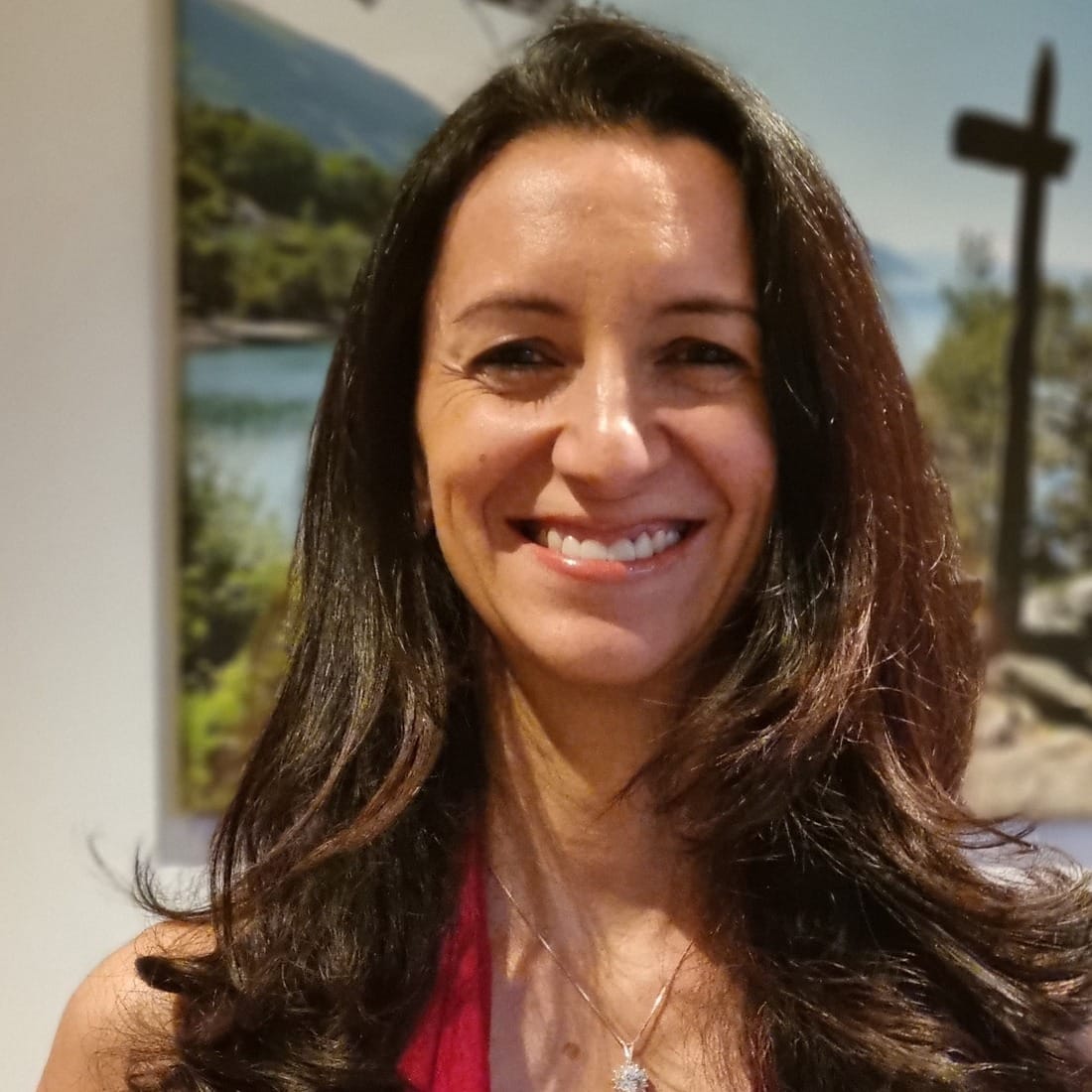
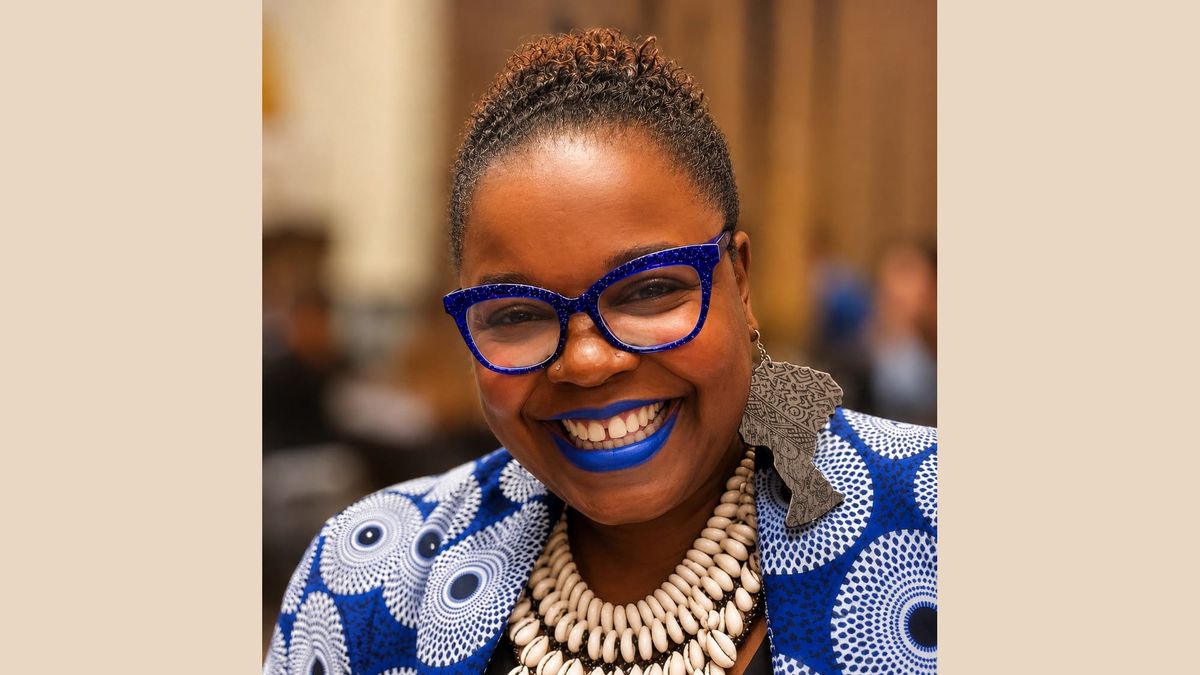
Rev. Dr. Aisha K. Brooks-Johnson, Executive Presbyter of the Presbytery of Greater Atlanta. Foto: Privat.
Terskelen
Brooks-Johnson does not argue that the contested passages were written for one congregation, and she does not argue that they have expired. She moves the question one step back and says the problem does not rest on Paul alone. Is it Paul or is it patriarchy? The reading that finds a prohibition there is a reading taught with one eye open.
She is also the only woman in this series who says plainly that even churches which ordain women do not always treat them fairly, and that some of the resistance comes from other women. The stained glass ceiling is her term for it, and the leadership she describes is not a pulpit but a mid-council of twenty-nine thousand members.
Two questions remain for the editor. She calls the Bible infallible and God-breathed, and in the same breath says she might not like everything in it. What does infallible mean when the reader reserves the right to dislike? And her strongest argument is not exegetical but structural: ask who benefits from the reading. The other side will answer that this reduces a conviction to a motive. They have the floor before we pass judgement.
But her last question is the one that does not go away, because it was not put to them. It was put to us.