Kvinnelige prester. Dialogen · Del 39
Maannguaq Maren Maria Dalager is Dean of Nuuk in a church where the bishop and all three deans are women. She does not care whether the Bible is God's word word for word. It is there, she says, and that is the respect we put in it.
Av Maria Solbak Årnes · Video conversation with Maannguaq Maren Maria Dalager, domprovst i Qeqqata Tunullu Provsteqarfia (sæde i Nuuk), Church of Greenland · 9 September 2026
For the first five minutes we could not hear each other. «Can you hear me?» «Yeah, now I can hear you.» «Okay, so it's fixed.» It was ten in the morning in Nuuk. I told her she was the only person from Greenland in this series, so she would have to answer for everything about Greenland. «Okay.»
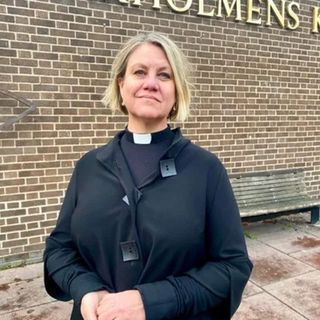
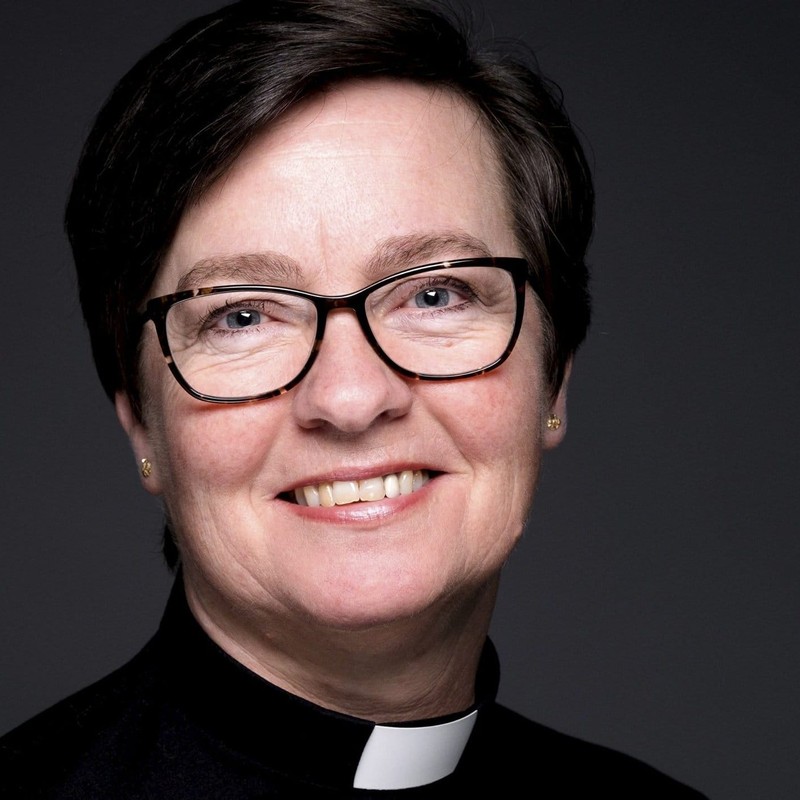
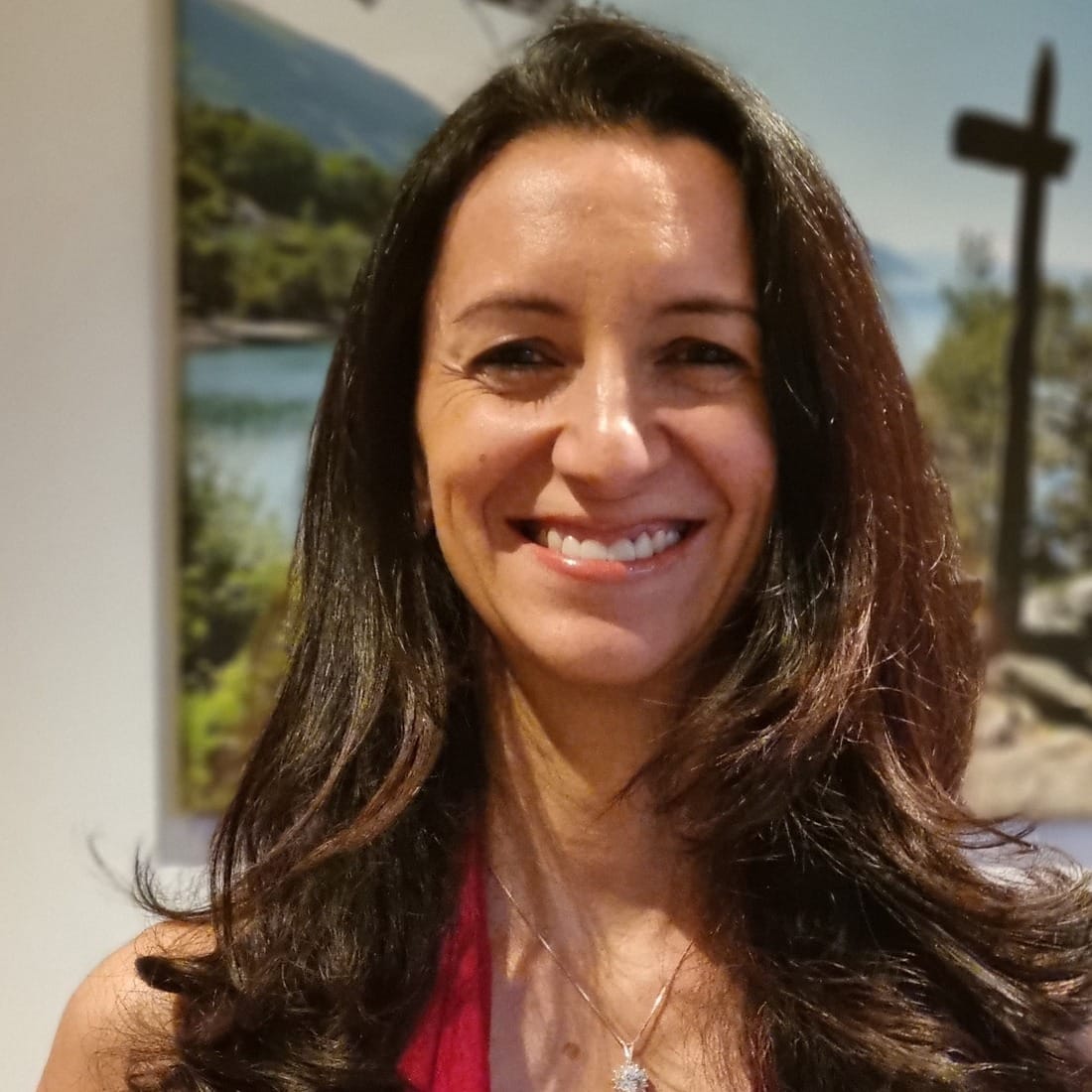
Maannguaq Maren Maria Dalager
Domprovst i Qeqqata Tunullu Provsteqarfia med sæde i Nuuk. Hun har tidligere haft virke som præst i Grønland og i Danmark. Født 31. december 1976.
The Church of Greenland
Kalaallit Nunaanni Ilagiit, the Evangelical Lutheran Church of Greenland, counts about 95 per cent of the population as members. Greenland became a diocese of its own with its own bishop in 1993; the country's seventeen parishes are divided into three deaneries, and there are 25 clergy posts including the bishop and the three deans. Under the church law of 2010 the church answers to the Government of Greenland. Sofie Petersen, the first Greenlandic woman to complete the full theological degree, was ordained in Sisimiut in 1987 and consecrated in Nuuk in 1995 as Greenland's first woman bishop. The complete Bible in Greenlandic was authorised in 2000. In February 2026 the church's delegation to the World Council of Churches consisted of Bishop Paneeraq Siegstad Munk and the deans Maannguaq Dalager, Kirsten Grønvold and Juaanna Platou. Sources: lex.dk, Dansk Kvindebiografisk Leksikon, Bibelselskabet, World Council of Churches, Nuuk Præstegæld.
Ninety-four per cent
MARIATell me briefly about yourself, whatever part you like, and where you serve today.
We are Evangelical Lutheran Church. In today's numbers, 94 per cent of the population belong to the church. Most everyone. They've been baptised.
As you know, we are not that many people. 56,000 in all of Greenland. And we spread from Thule to the south and east Greenland, so we live far from each other. There are seventeen cities and, I think, 56 settlements.
MARIAIs it hard to have priests in all these different places?
Not at the moment, but it can be. In the north and east Greenland, there has not been a priest for a long time.
The national broadcasting radio, KNR, they send our Sunday mass directly on the radio. So you can listen to it from where you are.
Words you only find in the Bible
MARIAEnglish is your third language?
Greenlandic is my first language. West Greenlandic. Danish is my second language. And then English is my third language.
It's very difficult, because we don't have P and B. And we don't have this Q.
MARIAI guess you have your own translation of the Bible in Greenlandic?
Yes, we have everything in the church. We have the Bible in Greenlandic, the last translation, I think it's from 2005. And then we have an altar book, for every Sunday we have readings and prayers. And then we have a ritual book, where we all know what to do.
We have a very small Danish congregation here. But right now our Danish pastor, she moved to Denmark. So we have no one. Hopefully when she will be coming back, she will start to have her Danish services again.
MARIADo you think there is some difference in the interpretations from the Danish or English to the Greenlandic?
Yes, because when you can understand Danish or English, you can always read that version. But if you only know Greenlandic, you only know this version.
Some words are difficult to translate from Greek to Greenlandic. Then you have to invent biblical words, which luckily has been done for many years. We have those words to use. You don't use those words normally in the everyday language, but then you find them in the Bible.
MARIADo you have an example?
It's a lot of holy. That's what you use a lot in the Bible. Something holy.
I asked her, since most people in Norway have never heard Greenlandic, whether she would read something aloud. «I would just read it as a prayer.» She did. I did not understand a word of it.
Maannguaq Dalager reads Matt 6,9-13 in Greenlandic, 9 September 2026.
Teksten hun leser
Matt 6,9-13 · Biibili kalaallisut (Bibelselskabet)
Ataatarpooq v9 Taamaattumik ilissi ima qinussaasi: Ataatarput qilanniittutit! Aqqit illernartitaali, v10 naalagaaffiit tikiulli, piumasat qilammisut nunamissaaq pili; v11 inuussutissatsinnik ullumi tunisigut, v12 akiitsukkatsinnillu isumakkeerfigitigut, soorlu uaguttaaq akiitsortivut isumakkeerfigigivut; v13 ussernartumullu pisinnata, ajortumilli annaatsigut. Illimmi pigaatit naalagaaffik pissaanerlu naalannassuserlu naassaanngitsumik! Amen.
Five cities and the villages around
MARIAWhere are you in life right now?
The Greenlandic Folkekirke. We have a bishop, and right now it's Paneeraq Siegstad Munk, and she has an office just right down there. And there's a church beside it, which is Our Saviour's Church, which is like a domkirke. The main church of Greenland.
And then I'm a domprovst, it means I'm a dean. We have the city Nuuk and its villages, and I have five cities and the villages around. So it's my area to take care of the workers and spiritually guide them. That's the main. And we have a law, because we have a home rule government, so we have a church law, which we follow.
MARIAIs the church connected with the state?
Yes. The department for church is our head.
MARIAAre there no other types of congregations in Greenland?
There is a church here for Jehovah's Witnesses. There's a church for the Pentecostal Church here. And there has been for many years, for over fifty years I think, a Catholic church, but right now there's no priest. There's a lot of Filipinos who come here for work, and they keep it alive. So a priest from Denmark comes here to serve the Catholics. And there's a small congregation here for Bahá'í.
Not afraid of the judging
MARIADid you grow up in a family within your church?
We grew up in the belief. You go to Christmas mass, all the important things, and when someone gets baptised, you also attend, you get confirmed. It's a big deal here, you get your own costume made, and all your family come. So it's a big day, a Christian day. And then a lot of people get married in churches now.
MARIABut evening prayer and speaking about your belief, is that more important?
It's more like you teach your children to pray in the night. It's normal here to teach that there's a Jesus, a saviour for you, so you don't be afraid.
That's the most I can remember. But it wasn't dominant. There are no people who don't drink or smoke, it's quite the opposite, I think. People are more free here, they're not so afraid of the judging.
Never imagined another work
MARIAHave you always thought about being a priest, or when did that happen?
It was in my gymnasium. I finished and had one year's break, and started at the Greenland University.
MARIAWhat made you decide then?
I don't know. I never imagined myself having another work. Because in thinking for me, it's right.
And there are not so many priests here. Not in the sense of a safe job, because you only need one in every place. It's more that you don't get to know so many priests in your life, unless you're a priest yourself.
I never imagined myself having another work. Because in thinking for me, it's right.
More than the men
MARIAHow is the view on women in ministry in Greenland, would you say?
It's fairly new. I think it started in 1987, the first female priest came, and now we are more than the men. And all the leaders are women right now. All the deans and the bishop are women.
MARIAWhat happened to the men?
They are here.
I think it's just a normal development in many countries right now, where women are finding their own place. Rightfully.
What happened to the men? They are here.
MARIAHave you ever experienced people being negative towards you becoming a priest?
It was 21 years ago I was ordained and started to work in northern Greenland, in Upernavik, where there are nine villages. Sometimes people got a little surprised.
But also the Greenlandic people are not so direct. They're nice to you, in front of you. If there were, they didn't say it to me. They're good at hiding. Of course you can feel it sometimes, but they don't really say. But there have not really been any.
If we don't see the ocean, we cannot breathe
MARIADid you study all in Greenland?
Yes. We only have a bachelor's degree here at the University of Greenland. You can only take it until bachelor's. And back then I didn't care for moving to Denmark.
MARIABut you have served in Denmark, haven't you?
Yeah, four years. I never imagined living in Denmark. It's so different. We have mountains and we live by the ocean here. If we don't see the ocean, it's like we cannot breathe. That's how we feel. And then we live through storms and snowstorms. There's a harsh winter and a nice summer. It makes who you are. You appreciate life and laugh a lot and be happy. But in Denmark it's monotone. No bright colours. That's how we feel.
I only worked with the Greenlandic, because it was for the sick and for the incarcerated.
Her husband is from Egypt. I asked how she found him. «It's a vacation. Don't do that.» They have been together seventeen years.
If we don't see the ocean, it's like we cannot breathe.
Luther was closest
MARIAWhat do you think the Bible is?
It has been interpreted so many different ways. But I think Luther, the founder of our church, was the closest to the truth. That's how I feel.
MARIADo you think the Bible comes from God, word for word? Or was it inspired?
I don't really care about that. We have the Bible. It's there. It's the cornerstone of every move or every work we have here. That's the respect we put there. So we don't have to really speculate.
I don't really care about that. We have the Bible. It's there.
You can use the Bible against anything
MARIAWhoever I ask, there are two texts that are mentioned when people argue against women being ordained. I guess you know Paul's two letters.
Tekstene det gjelder
1 Timoteus 2,11-14 (MANTELEN NT)
En kvinne skal lære i stillhet med all underordning. Men jeg tillater ikke en kvinne å undervise eller å utøve myndighet over en mann, men å være i stillhet. For Adam ble formet først, deretter Eva. Og Adam ble ikke bedratt, men kvinnen ble bedratt og er kommet i overtredelse.
1 Korinterbrev 14,34 (MANTELEN NT)
Kvinnene deres skal tie i menighetene; for det er ikke tillatt dem å tale, men de skal underordne seg, slik også loven sier.
I think you can use the Bible for anything against. Against women, all of it. You can use all the Bible against women. Or against humanity, or whatever.
MARIAWhen I read Paul's letters, First Timothy and First Corinthians, what he says about the role of women sounds very much like some sort of submission is the ideal, given that Paul knows what God wants. And he says this is because of Adam and Eve, and how God made Adam first and then Eve. Do you believe there is anything we can get out of those letters that means something today?
You can read them from a cultural perspective, I think. Also in the culture here, fifty years ago no woman was at work. Because you had to care. And also the Bible said so, you know.
I think it's difficult to defend those texts. But then you can also say it's a cultural perspective on things. Because the society's movement is so new; women have had some power and say only in recorded history now.
The only thing you have to maintain is: we have the right to be here as equally as the men. In the church or in life or everywhere.
MARIAI don't think the discussion is so much about equality. I have never spoken to anyone who doesn't think men and women are equal, and Paul also writes that men and women are the same to God. But do you think there are differences in roles for men and women that are more ideal?
Sometimes I try to think this way. I think about all the people who write books. Sometimes you feel: oh, this must be a man who wrote this book. But then you find out it's a woman. Or you find a great book, and it was written by a man. You can never really say by reading a book if it was a man or a woman.
And also, when you are friends with men and women, you don't really see the difference. If you have a really good friend in a man, or a really good friend in a woman, for me they are the same. Or your granddad or your grandma, when I really think about the role they play.
But the difference is when you talk about a mother and a father. The roles are like the mother, not in a biblical way mostly, I think, because the mother is always the one who raised you, the one who fed you. It's the closest thing, I think, you can understand God's love.
You can use all the Bible against women. Or against humanity, or whatever.
Always harder to be a Christian
MARIAJesus talks a lot about love and God's love. But he also says that you have to follow him, carry your cross, and it will be hard. Do you think there are truths in the Bible that are hard to accept?
No, I think it's the condition of life. Some people can think, because the welfare society has arrived, that's how life is supposed to be. But it's not. We have hunters here who have to hunt to get some food. And you have to prepare the food. It's a hard life. It's the human condition. The welfare society makes you think it's supposed to be like that, but it's not. How much running water was there a hundred years ago?
MARIADo you think it's harder to be a Christian than not to be a believer at all?
It's always harder to be a Christian. Because it says you have to love thy neighbour like you love yourself. And it's not easy.
It's always harder to be a Christian.
Any relationship
MARIAIt is mentioned that we should have God as our head, that Christ has God as his head and man has Christ as his head, and in the same way that women should have their man as their head. Do you think there is some way of marriage or relationship that is good for us?
Tekstene det gjelder
1 Korinterbrev 11,3 (MANTELEN NT)
Men jeg vil at dere skal vite at Kristus er enhver manns hode, og mannen er kvinnens hode, og Gud er Kristi hode.
I think any relationship is good for us. I don't really think about whether it's between a man and a man, or a woman and a woman, or between a man and a woman. As long as it's consensual.
I think all relationships are important. Because the unity makes us stronger and provides for the society. I think that's good. Because the only thing we go to church for is to be together. Otherwise we would just be home, listening. You don't really have to go to church, you can read the Bible. But we go to church to be together.
The cornerstone
MARIABut why do we read the Bible then? What's the point?
I think, as the Bible says, the Holy Spirit comes to you, and then you believe it or you don't believe it.
It's just to be there as a cornerstone. It's not different from here to there. It's never going to be different if it's read by a woman, a child or an old lady or a man. It's the same. It's the reader's interpretation. In a hundred years maybe they're going to say: oh my God, it was so wrong. But we're doing our best in understanding, and the Bible is there.
I don't know if it's there for happiness. I don't think so. Because I think if you have a belief, it certainly will change your DNA. It certainly will change how you look upon life. It certainly will make you have this feeling of communion with the world. Especially here. You can see the ocean. All dominant. You really know that you are not the master of your own life.
You really know that you are not the master of your own life.
Many ways to God
MARIADo you think Jesus is the only way, or do you think there are many ways to God?
Tekstene det gjelder
Johannes 14,6 (MANTELEN NT)
Jesus sier til ham: «Jeg er veien og sannheten og livet. Ingen kommer til Faderen unntatt gjennom meg.
Of course there are many ways to God. Of course there's the divine in everything, if you believe God created everything. But hopefully they will choose. Hopefully they will open their eyes to Jesus. But we are not the masters, you know.
MARIABecause you think Jesus is a safe way to God, at least?
Not a safe way. There's nothing safe in this world. At least for peace of mind. Because he said: I take upon me all your sins. It's a ridiculous thought, but if you understand it for one second, you will get this moment of relief. Okay, I understand a little of how being saved and loved is supposed to feel.
Of course there are many ways to God. But we are not the masters.
The confession of Christ
MARIAIs there anything you believed when you had just finished your education that you look upon differently today?
No. I never felt different. I don't know why.
Sometimes you can be academic and talk about stuff and stuff. But we have the confession of Christ.
The absent father
MARIAIs there anything I haven't asked you that should be in this article, when we are talking about Greenland, faith, women and men?
We still have no domestic equality, I feel. But we are getting there. And it's important just to say: the church is working here. It's blessed. If it will be standing here in fifty years, who knows. I'm hoping, and I sense it will be standing.
MARIAHow does the inequality look? What's not equal?
Most of the women are raising the kids. The dad's absent. He just left, I think. It's more and more, I don't know why. Now you have the free will to take care of your kids. But they don't.
I said I wanted the article to be her voice and her opinions, not mine. «I think I'm old enough to have my own opinion,» she said. Then, as we said goodbye: «Godspeed for you.» I wished her the same.
Portrett
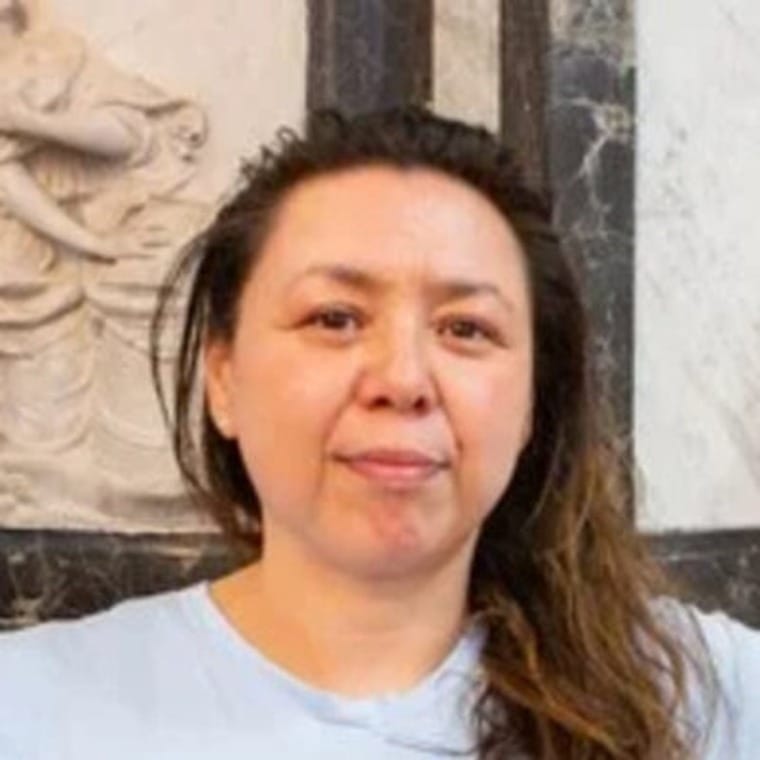
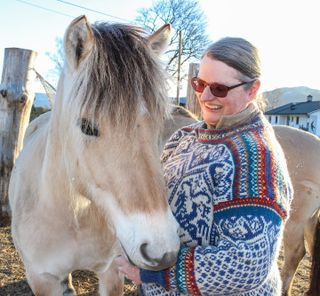
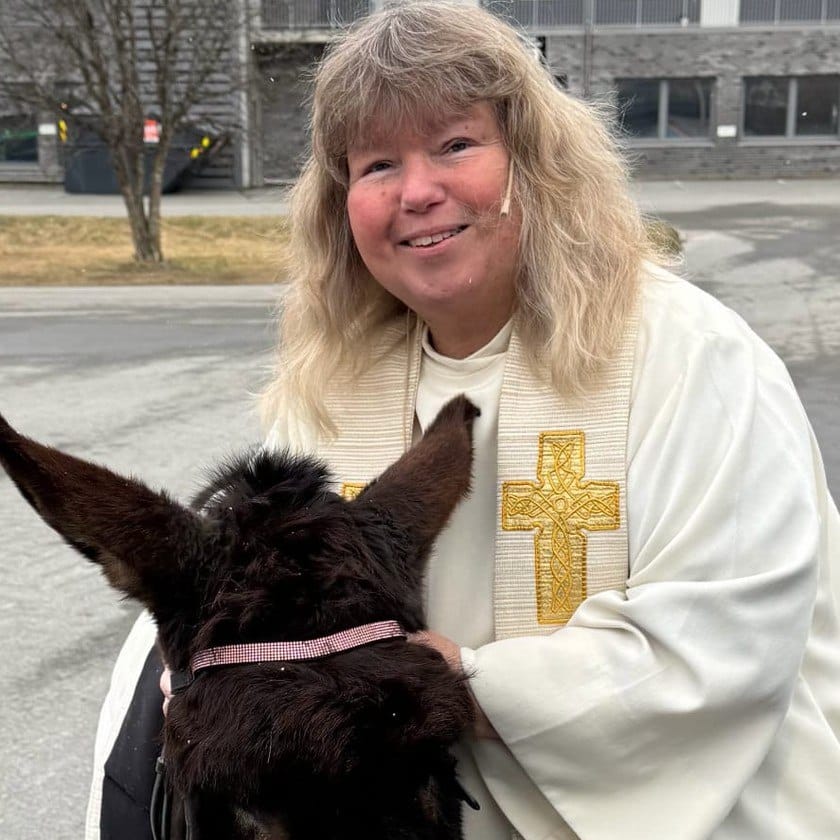
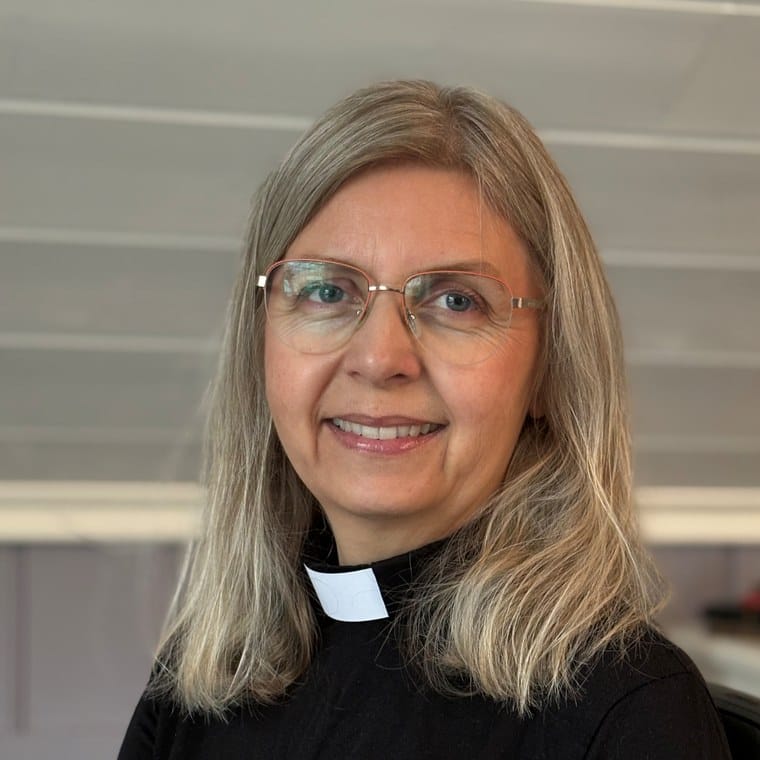
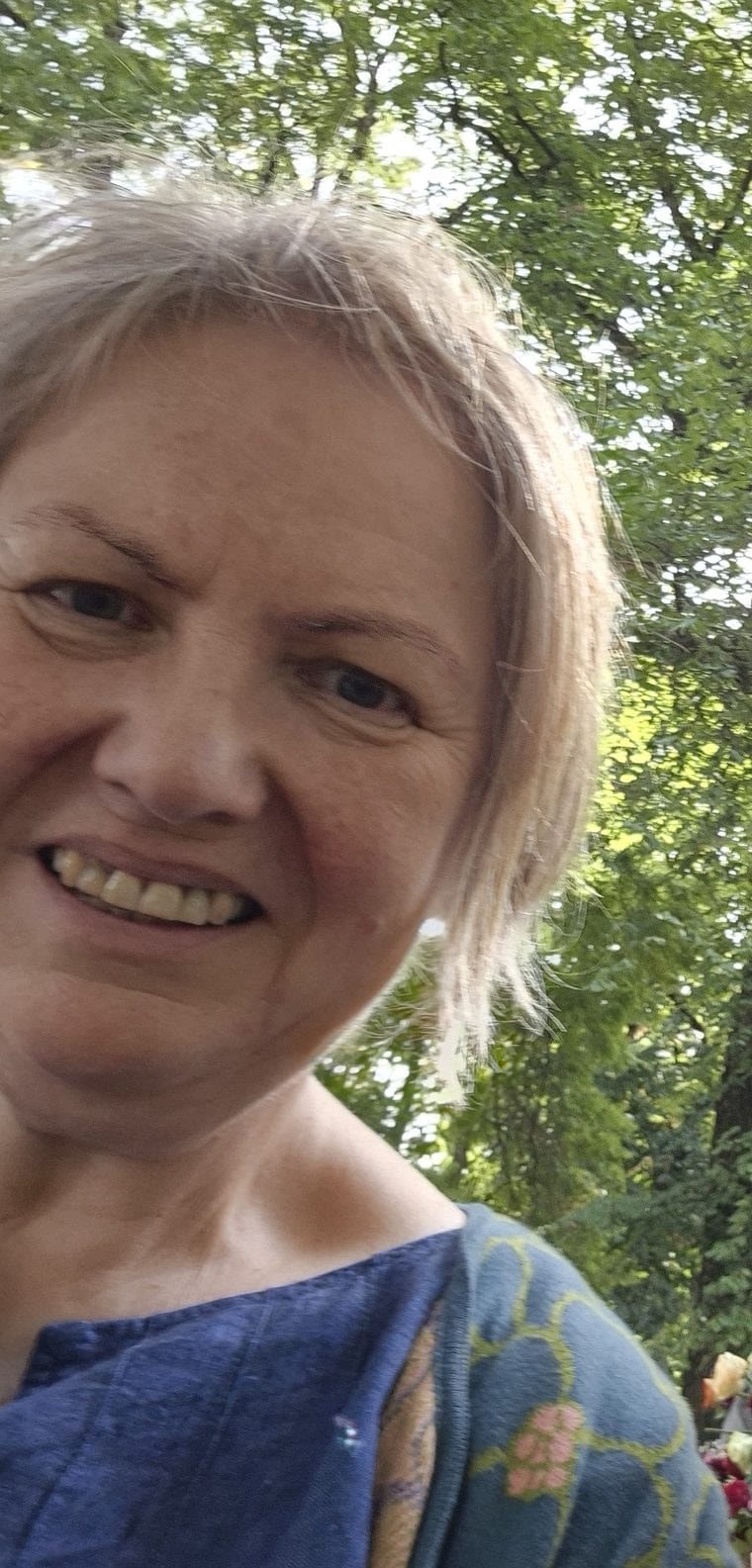
Maannguaq Maren Maria Dalager, domprovst i Qeqqata Tunullu Provsteqarfia. Foto: Privat.
Terskelen
Maannguaq Maren Maria Dalager is the first voice from Greenland in this series, and she describes a church that has gone further than any other here: women ordained since 1987, now more women than men among the clergy, and every dean and the bishop a woman. Asked what happened to the men, she answers in three words. They are here.
She is also the only one who declines the question the series has put to everyone. Whether the Bible is God's word word for word does not interest her. It is there, it is the cornerstone, and one need not speculate. Paul's texts on women she reads as a cultural perspective and says plainly that they are difficult to defend. Any consensual relationship is good; there are many ways to God; the one thing to maintain is the right to be there equally with the men.
Two questions remain for the editor. If the Bible is a cornerstone one does not speculate about, what does it bind, and what could it ever forbid? And if Luther was closest to the truth, what does Luther's church do with the verses Luther's Bible contains? The other side has the floor before we pass judgement.