Kvinnelige prester. Dialogen · Del 44
Eliška Vančová preached her last sermon the Sunday before we spoke, and expects a child within the month. Eliška is also two years into a doctorate on ordination, and says nobody hands you a paper signed by Jesus.
Av Maria Solbak Årnes · Video conversation and written answers, Eliška Vančová, pastor in Chrudim, the Evangelical Church of Czech Brethren · 8 September 2026 · 2 October 2026
Eliška asked how I had found her before I could ask anything at all. Through a wide Google search, I said, looking for ordained women from different churches, countries and ages.
Elected, not sent
MARIATell me where you are today and where you serve.
I am a pastor, or minister, there are so many ways to call it, in the Evangelical Church of Czech Brethren, which means I am not a priest.
Now I serve as a pastor in a congregation almost in the middle of the Czech Republic. It is two towns that cooperate, and two women pastors who cooperate. I have been here two years, almost exactly.
Our church is a combination of synodal and presbyterial leadership, which means that I am not sent somewhere. I am elected. There are congregations looking for a pastor, and there are pastors looking for a congregation, and then I must agree and they must elect me. It is for a specific term, usually a few years, and then we decide whether we are going to share the road once more.
It sounded a little like an arranged marriage, I said.
Not exactly. It is probably how you get a job in any other field. They are looking for someone, you are looking for a job, and if it matches, then you go together. But it is not planned by anybody other than me and the congregation. Of course it must be approved at all the levels, but it depends on the lowest one, on the local one.
Fakta
The Evangelical Church of Czech Brethren. Českobratrská církev evangelická was formed in 1918, when the Czech-speaking Lutheran and Reformed congregations of Bohemia and Moravia joined. It is governed presbyterially and synodally: a congregation elects its own pastor, and the synod elects the executive body. On 30 October 1953 the synod resolved that ordination in the church should be open to properly prepared men and women alike, by 79 votes to one with one abstention, after some thirty years of discussion and a consultation of every parish council. The first four women were ordained in Poděbrady on 13 December 1953: Alena Srnková, Antonie Slámová, Eva Peroutková and Jarmila Jeschkeová. In 2020 the church counted 250 congregations in thirteen seniorates. Its own register held 60,507 members at the end of 2021, while more than 32,500 people gave the church as their affiliation in the national census the same year. Its pastors are trained at the Protestant Theological Faculty, founded in Prague in 1919 and part of Charles University since 1990. Sources: Českobratrská církev evangelická, Religionistická encyklopedie, e-cirkev.cz, membership, Protestant Theological Faculty.
No bishops, one ordination
MARIA[Written follow-up: how your own church is ordered, and what its rules say about who may be ordained.]
Our church has no bishops. No, there is no such a thing about anyone's gender or orientation or anything, the congregation can decide that they don't want this or that candidate as well as the candidates can decide they don't want to go to this or that congregation.
Our church has just one ordination: ordination to the ministry of Word and Sacrament, which is baptism and Lord's Supper for us. It is always for concrete ministry, but the ordination itself is permanent, and not a sacrament.
We have a synodal-presbyterian structure of leadership. The elders, the seniors, the curators and so on are elected, and gender doesn't matter for any of the positions, and it makes sense. The gift for oversight is not dependent on gender but on the Spirit's will.
The gift for oversight is not dependent on gender but on the Spirit's will.
Living in the job
MARIAAnd where do you live? Do you have a family?
I live in the parish house, as pastors usually do. I think it is a specific thing, that you live in your job. I live here with my family. I have a husband, and I am expecting a baby in a month.
So it will be changing for us a bit, because I will be on maternity leave. It is also a specific thing that I will still live here. I will be part of the congregation, but now as an ordained member, not as a pastor. That is a specific thing that happens when you are ordained and when you have a family.
When you are a woman, I said.
And you are a woman. Well, fathers can do this too, not for the maternity leave, but for the parental leave later. But it is true that by percentage it is more often a woman who goes for that in our country.
That is just one thing that some ordained women can go through. That can be an experience like mine, that we do the job but also have a family. It is not just women, of course, but I think we encounter this more often still.
I had my last Sunday worship the Sunday before.
I will be part of the congregation, but now as an ordained member, not as a pastor.
MARIAHow long is the leave?
Maternity leave is half a year, and then parental leave runs to the child's third birthday. You get an amount of money which is quite low, but it is there, and you can decide whether you take it over half a year or over three years. You can have a part-time job alongside it.
Of course, not everyone's financial situation lets them stay away from work that long. And I don't know how it will unroll, how easy or how hard it will be to settle into this new role here. Being here, but somehow different for that time.
I told her I envied her. In Norway the leave is a year at most. I said I had heard it was three years in Russia, and she finished the thought before I got there.
Well, that's why. Because we were part of the Soviet bloc.
The one good thing is that some socialist plans weren't that bad. That one, and that you can study free of charge and get medical care free of charge. You pay quite high taxes every month, but then it is available to everybody, at the basic levels.
The child who wanted to be a pastor
MARIADo you come from a Christian family?
I do. My parents are converts. My dad did the study and the training, but then he became an academic, not a pastor. So I grew up in a church.
And in our congregation there was a couple, a woman pastor and her husband, also a pastor. I found their job very interesting and inspiring. So when I was little, being a pastor was the first thing I wanted to do when I grew up.
Eliška is the first in this series to answer that question that way.
But then, of course, I wanted to be more normal. So I was thinking about maybe becoming a teacher, but I still wasn't satisfied with that decision. And then at the end of high school I met some students from the Protestant faculty, and the study sounded interesting to me. So I decided once more that I would do this. And since then I am going on that path, and I feel it is the one I am supposed to be on.
MARIADo you feel you have a calling?
I think I can call it this way. Without it, well, I think it is something I can't be alone in. Without the feeling that God is somehow in it with me, and the church in it with me. And of course my close people, because it affects the family more than the average job people have.
So it is important for me to feel that it is not just me who sees it as a good decision, that it is somehow a communal thing. But of course it is hard for me to say that God really wants me to do this. I don't know. I somehow feel that I am not alone in it and that He is with me on my path. But it would be problematic for me to use something that I know what God wants. I don't know.
It would be problematic for me to say I know what God wants.
Doing everything and nothing at once
MARIAWas there a subject you liked more than the others?
Practical theology. I am also doing my PhD on liturgy, which is part of practical theology, and my topic is ordination and ordained ministry in the Evangelical Church of Czech Brethren. So pastors are also my favourite topic in an academic way.
It is a part-time job in the congregation, just half of it, and then the PhD. So I am doing everything and nothing at once.
So pastors are also my favourite topic in an academic way.
The teacher who said no
MARIAHave you ever felt that people were negative to you becoming a pastor because you are a woman?
I don't think it was because of my gender. There are moments when I feel more that I am not alone in it, and moments when I doubt whether it makes sense what I am doing. Not the existential doubt about whether it makes sense to be a pastor, but whether it makes sense to do the job the way I do it.
When I was finishing my master's and going into the training year, there were just a few of us, and the church said, well, maybe we will cancel it for this year. That was one big moment when I thought, if it happens, I don't know where I will be in a year. That is quite a long time for somebody between twenty-five and thirty. I didn't know if I would come back again, and I would have been sorry not to. Support is not only the feeling that you are not alone. It is also practical, and our church is not always supportive enough in that way.
On gender, I think it is more okay for members of the church that I am a woman than for people outside it. When I communicate with a mayor, it is clear that if I were a man in his fifties my voice would be heard more. The church is quite used to having ordained women.
Sometimes it is easier for people to be close to me because I am not a threat. It is probably easier to think of me as a safe person, and that is also because I am young. And sometimes it is hard to reach people because of the authority I don't have, and that is not just in church, it is in the whole society. In our republic people are more used to men. So sometimes I am not sure which part of my lack of authority comes from being a woman and which from being young.
I am not sure which part comes from being a woman and which from being young.
MARIADid you meet other opinions among your fellow students?
At the faculty, there was one elderly male teacher who generally wasn't keen on women and once stated, without any explanation, that women should not study theology.
I think his reason was just his personal issues. But it is usual that we have some personal issues, and then we say this whole group can or cannot do this. And of course, if it were not the case in society that some things are more for men than for women, he would not have had that argument to use for his issues.
A letter to a specific situation
MARIAAre there arguments in Scripture that suggest women should not be ordained?
You can find almost anything in the Bible if you read it in the way you want to. So of course there are people who can find it there. But the way I read it, and the way I am convinced about the message the Bible gives, it is not there.
I still think it is more cultural than religious. Religions, especially when they are institutions, take a long, long time before we actually change something. We live in a culture and we use the cultural things we know, and sometimes we are a bit misled about what is part of the religion and what is part of the culture. Institutions are very slow to change. That is why religion sometimes takes longer to change something that has already changed in the society around it. But I don't think it is connected to the faith. It is not part of the creed.
You can find almost anything in the Bible if you read it in the way you want to.
MARIAHow do you read Paul, First Timothy and First Corinthians?
I read it as a letter to a specific situation. And in that specific situation, Paul suggested that these women really should be silent. I can imagine that his words are quite strong, because the manipulation of power that happens even in local congregations, in small communions, is something that happens all the time. And it can be anybody. We have a few women in our congregation who talk together during Sunday worship, so I can imagine a group of such women doing things like this. Paul is strong in the way he says things all the time, so it is not surprising that it is so in this case too.
The second thing is that I don't think he wrote First and Second Timothy, or Ephesians. For me it doesn't matter who wrote it, but these are later texts, written from the position of somebody who is threatened by the power of widows in a congregation. I can't tell whether that was good or bad in that specific situation, but I can imagine that was it.
Still, I don't think that is Paul's main message, and it is not the main message of First and Second Timothy either. The author, or maybe a group of people, wanted the church to be together and not separate. They wanted so much to organise it, to make a structure that is transparent, that they did some things we are dealing with even right now in some places. But all of that is inside a specific situation, not a general rule that women never speak ever.
MARIA[Written follow-up: that the church read the silence passages the same way for most of its history.]
The church's theology was never one and never straightforward, so the argument you are proposing is just trying to make the history of the church more simple than it ever was.
The church's theology was never one and never straightforward.
Two stories of creation
MARIAPaul gives his reason from the creation story, from Adam and Eve. Does that make a difference?
No. Paul draws on Jewish rhetorical and interpretive traditions, and that is the framework in which this argument from Genesis operates.
The creation story is in a discussion with the neighbouring stories from Mesopotamia. The Jewish voice is that God created the world to be good, and that the created world is something good. In the Mesopotamian narrative the world is something like a punishment for somebody. This story is trying to say no, that was the plan to make the world, and it was a good plan. It was not a punishment. It was a good thing.
So I think it is always important to look for the main message, what the author of a text is trying to say. And it is definitely not that women are something less than men.
There are also two stories of creation. One is more about the good world, that we are part of the creation. The second is more about the image of God, and there are interesting nuances in how to read it. It is more like the Greek way of seeing the world, that men and women together create a personhood. That humanity means both of them, not just one. That man is not a different species from a woman, and together we make the image of God.
In the more priestly version of creation it is probable that the hierarchy is stronger, because for the Old Testament priests that was something they lived in, and it was important to them to have the right hierarchy so that the world works properly. But I still don't think that is the main message, even though women in that time didn't have a good position in that game.
That man is not a different species from a woman, and together we make the image of God.
Deleting the man from the hierarchy
MARIASubmission is mentioned in many places. Do you think God's will contains submission in some form?
I don't think so. I am a more democratic person, and I think that freedom is what God is giving us, and the responsibility that comes with it. For me it is hard to see the world as a hierarchy. It is there, but I don't think it has anything to do in there. I would not even say that people are something more than animals and that we should rule them.
Maybe there is one hierarchy that gives me that freedom, which is that I believe God is on top of everything, and He is the only one on top of all things. So in that hierarchy there is me, and then there is God. There is nobody else who can enter our relationship in that way.
MARIAAnd when the text says the man is the head of the woman, and Christ the head of the man?
It was there, definitely, and it is even now quite strong in our culture. But I think there is a risk that you would listen more to the voice of the man who is nearest in the hierarchy than to Christ. And that's why I would delete the man from it.
I think that is a bit of my Protestant background, that we don't need anybody to intercede. We don't need anybody in our relationship to communicate with God. We don't need a priest. We can do it all by ourselves. Or, to put it a different way, God speaks to us. He does not need a priest or a man or anybody else to say something to us for us to get a message. That is maybe the core of my thinking about it, that it is something direct.
God speaks to us. He does not need a priest or a man or anybody else to say something to us for us to get a message.
MARIA[Written follow-up: that removing one link from the chain in First Corinthians eleven is a decision about the whole chain.]
No human can stand above another. Only God does. There is no such thing as a divinely planned chain or hierarchy within creation. Hierarchy arises from human abuse of power.
There is no such thing as a divinely planned chain or hierarchy within creation.
Testimony, not dictation
MARIAWhat is the Bible to you? Is it God's word, word for word?
It is testimony. It is the testimony of people of faith, of people who believed in God, about how they experienced God's presence in the world. That is the authority they are speaking from.
And we are part of this testimony. We don't write epistles that work this way, but we are still part of those witnesses that go on and on, and that continuity is necessary for the gospel to be sent forward. The Bible is part of that testimony, and because it is at the beginning of it, it has special authority.
But I don't believe there is something like a direct word of God. It is always our interpretation of it. Not the Bible, not us. We somehow have the feeling that we are grasping it when we are speaking, but we can get no closer than interpretation. Nothing we say is a hundred per cent truth. And I think it is a good thing, because we can't hold the truth in our hands. It is something we are supposed to seek. We will never hold it in our hands and say, yes, now I have it.
We can get no closer than interpretation.
MARIA[Written follow-up: if nothing we say is entirely true, what is preaching, and what is a creed?]
I mean basic semiotics. I interpret something when I preach, and the participant of the Sunday service interprets what I said. The truth can be grasped in the resonance we have made.
The creed expresses what I hold to be true.
The truth can be grasped in the resonance we have made.
Nobody had a recorder
MARIADo you think the apostles were led by the Holy Spirit as they wrote?
From the apostles, only Paul wrote something. Most of them probably didn't even know how to write. They spoke, which is of course enough. But the Holy Spirit was in it in the same way that He is in it when we spread the gospel nowadays. We never have the guarantee a hundred per cent, but the continuity of the gospel still goes on and on, and that is a good sign of it.
MARIADidn't Jesus tell His apostles not to worry about what to say, because the Spirit would help them?
We don't know exactly if He said it, because nobody had a recorder. It is an interpretation of everything He was trying to tell them, and that is how they saw His message.
There are two sides to it. The one pointing in the right direction is that we shouldn't be too worried about what we will say, because the gospel in a way needs us, but we are not necessary. If we say it right, sometimes it still falls on rocky ground and nothing happens. So we are one part of it, and if we don't do it right, it doesn't mean the gospel will never reach that person because of our fault. The exact words are not magical. They will not do the performance just by being said well. I believe that is something Jesus was really saying to the disciples, because most of them were fishermen, and they were probably worried about how they could say it right.
The wrong side is that it doesn't matter at all what we say, which I consider as misleading interpretation. It does matter what we say. We have our own free will, and the Holy Spirit will not erase it just to put the right words in our mouths. We are still responsible for what we say. I don't think the Holy Spirit works by telling us in that moment what we should say. It is more a permanent process, and He speaks through our preparing what to say, through our study, through our encounters with other people. That is the part we can't miss.
So we are one part of it, and if we don't do it right, it doesn't mean the gospel will never reach that person because of our fault.
Not then, but now
MARIADo you believe Jesus is the only way to salvation?
In my faith it is put that way, but how to interpret what it really means is a different story. For me the path leads through Jesus. But the way I see that path doesn't mean that somebody else who believes something totally different is not actually going almost the same way. I would not say of anybody that their path to salvation is closed just because they believe something else, or don't believe at all. I am not the one to decide it, and I don't even think it is true. But the way I am able to see the truth for myself is through this lens.
MARIAJesus also says that the tree which does not bear good fruit is cut down, and that some who say Lord, Lord will be turned away. Do you believe that?
I think it is not that easy to come to this conclusion. Because He is saying it to us not to tell us about how it will happen after we die or after the world ends. He is saying it to our current situation. He is trying to get the message to us that it really matters how we live our lives now.
The future makes the urgency of the message present, but He is speaking about life here and now. Most of those sayings about how it will once be are there to say something to us for now. It is not, then it will be like this. You should embrace some of those thoughts in your life now, and the best way to put it is to speak about eternity, the afterlife and so on. But I don't think it is so easy to jump from now to then.
He is not sharing that information, and according to the gospel He does not actually know. Not Christ eternal, but Jesus of Nazareth. He didn't know the time, as He says. So I believe it is true that it wasn't important when, and it wasn't important how exactly, but it is really important what we do now. All those things about the future are things about our present that carry the urgency of the future, because it affects us.
MARIA[Written follow-up: the saying is still framed as a verdict, and someone is turned away.]
The saying takes the form of a verdict because Jesus uses judicial language as a prophetic tool to expose a person's present condition. It is not information about a future punishment but a diagnosis of empty religiosity that is already untrue now.
Rejection, then, does not describe an eschatological event but the current reality of the relationship, or its absence.
A diagnosis of empty religiosity that is already untrue now.
No paper signed by Jesus
MARIAIf I want to live the way God wants me to, how can I know?
You don't really know for sure. That is an important part of it, that we really don't know for sure.
But there are some directions we can follow, and we always have the responsibility for how we interpret those directions. Being merciful, the importance of love to God, to ourselves, to our neighbours. Hope. All those big words, they are here. There are some leads for how to go through them, but in every situation we must decide for ourselves, and we must take the responsibility for our decision and do things the best we can. I think that is the closest to the truth we can get, that we are trying to do our best, and that we embrace our responsibility that it is our decision.
I don't have a paper signed by Jesus that I am now doing the right thing, and I will never have it. So I think it is directions, and there are many things that can help us make the right decision, but we can never put away our responsibility for every single decision we make, because nobody else than us has it.
I think that is the closest to the truth we can get, that we are trying to do our best, and that we embrace our responsibility that it is our decision.
The objections put to her
Four objections from the other side of this series were put to her in writing. She answered all four.
MARIA[Written follow-up: that Scripture can expose the cultural instincts we hardly notice, because they feel like common sense.]
We cannot escape from our culture as well as we can't escape from our interpretations, but that is not the point anyway. Scripture can indeed expose cultural instincts, but always through human reading, and human reading is inevitably cultural. That is precisely why we must acknowledge that the traditional interpretation is itself culturally situated.
The question, then, is not who reads without culture, but which reading best corresponds to the whole of the gospel and its dynamic. For me it is best said by Jesus in Mark 12,28-34. Cultural analysis is not relativism but a tool for hearing the text more accurately.
The question is not who reads without culture.
MARIA[Written follow-up: that reading First Timothy against Ephesus is the culture of this decade rather than the text.]
Paul himself shows that women prophesy, teach, and lead house churches, and his references to Genesis are not automatically a universal normative order but a common Jewish mode of argumentation. Therefore, an interpretation that distinguishes between the situation in Ephesus and the theological core of Paul's message is not the culture of this decade, but an attempt to read Scripture in its full breadth.
MARIA[Written follow-up: that if every interpretation is as good as any other, no disagreement can ever be settled.]
The objection that “if anyone's interpretation of any given verse is as good as anyone else's interpretation, then it will be impossible to resolve differences of interpretation,” once again confuses my acknowledgment that my reading of Scripture is an interpretation, and therefore cannot claim absolute truth, with relativism.
The idea that we must choose either absolute, culture-free certainty or an “anything goes” relativism overlooks the entire range of responsible, disciplined, and theologically grounded interpretation that exists between those extremes.
MARIA[Written follow-up: then what decides between two readings?]
Yes, every reading is an interpretation. But that does not mean there are no criteria for discerning between two interpretations. Christian tradition has always evaluated interpretation by asking how it corresponds to the whole witness of Scripture, to the way Paul works with the gifts of the Spirit, to the practice of the early church, and to the fruit that a given interpretation bears in the life of congregations.
What decides, therefore, is not individual preference but the broader biblical dynamic and its coherence across the texts.
As for the question of culture: distinguishing between what is situational and what is theological is not an attack on the revealed text. It is a way of reading it faithfully. Scripture itself shows that women prophesy, teach, and lead house churches, for example, Priscilla instructs Apollos in Acts 18, Junia is named among the apostles in Romans 16,7, Phoebe serves as a deacon of the church in Cenchreae in Romans 16,1, and Nympha hosts and leads a house church in Colossians 4,15. An interpretation that takes this entire biblical dynamic seriously is not the culture of this decade, but an attempt to read the revealed text in its full breadth.
What decides is not individual preference but the broader biblical dynamic.
What the argument leaves out
MARIAIs there something we have not talked about that you think is important?
Maybe that how ordained women stand in the church and in this society is not that much a question of how we interpret the Bible. It has that authority in Protestant theology, but not, for example, in the Roman Catholic one. And this argumentation is for the insiders. I think that we, as a church, are always part of the society, and that we must always think about it as connected.
Sometimes it is easy to think that with the emancipation of women, now that we can be ordained, the task is done. But I think it is not. It is still not equal in all aspects.
It is easy to think that now we can be ordained, the task is done.
MARIAHow was it to talk about this?
I didn't expect it would be that much about interpretation of the Bible. That is probably because I am now more in an ecumenical perspective. There are so many ways to look at this specific topic, and it was interesting once more to see it through the Protestant lens, which I also have. And sometimes it was hard for me to find the words in English.
Portrett
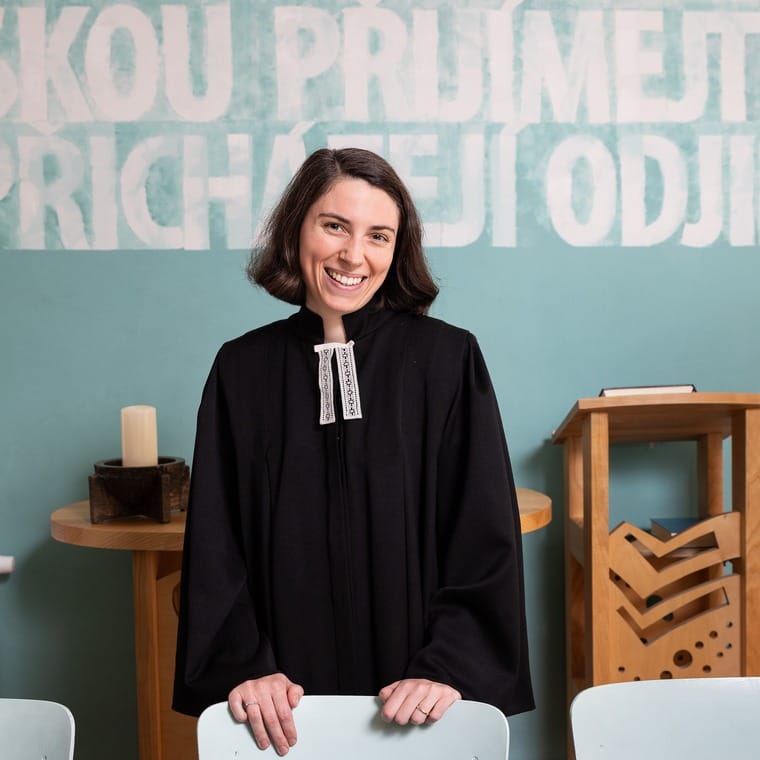
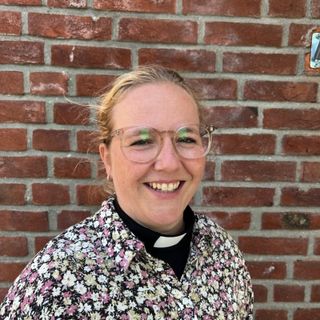
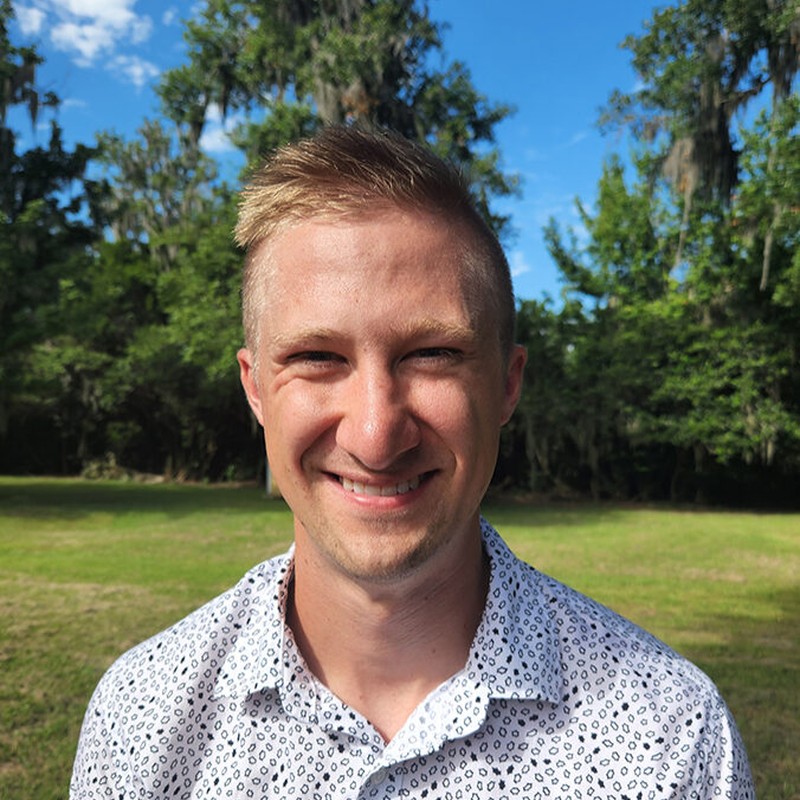
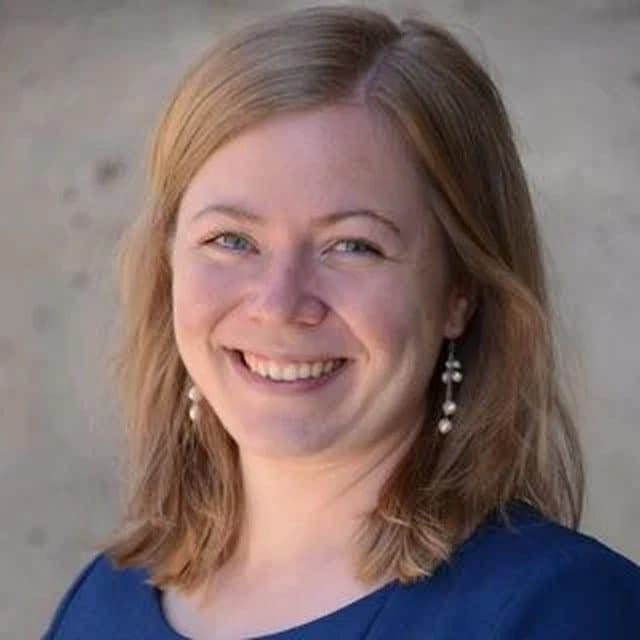
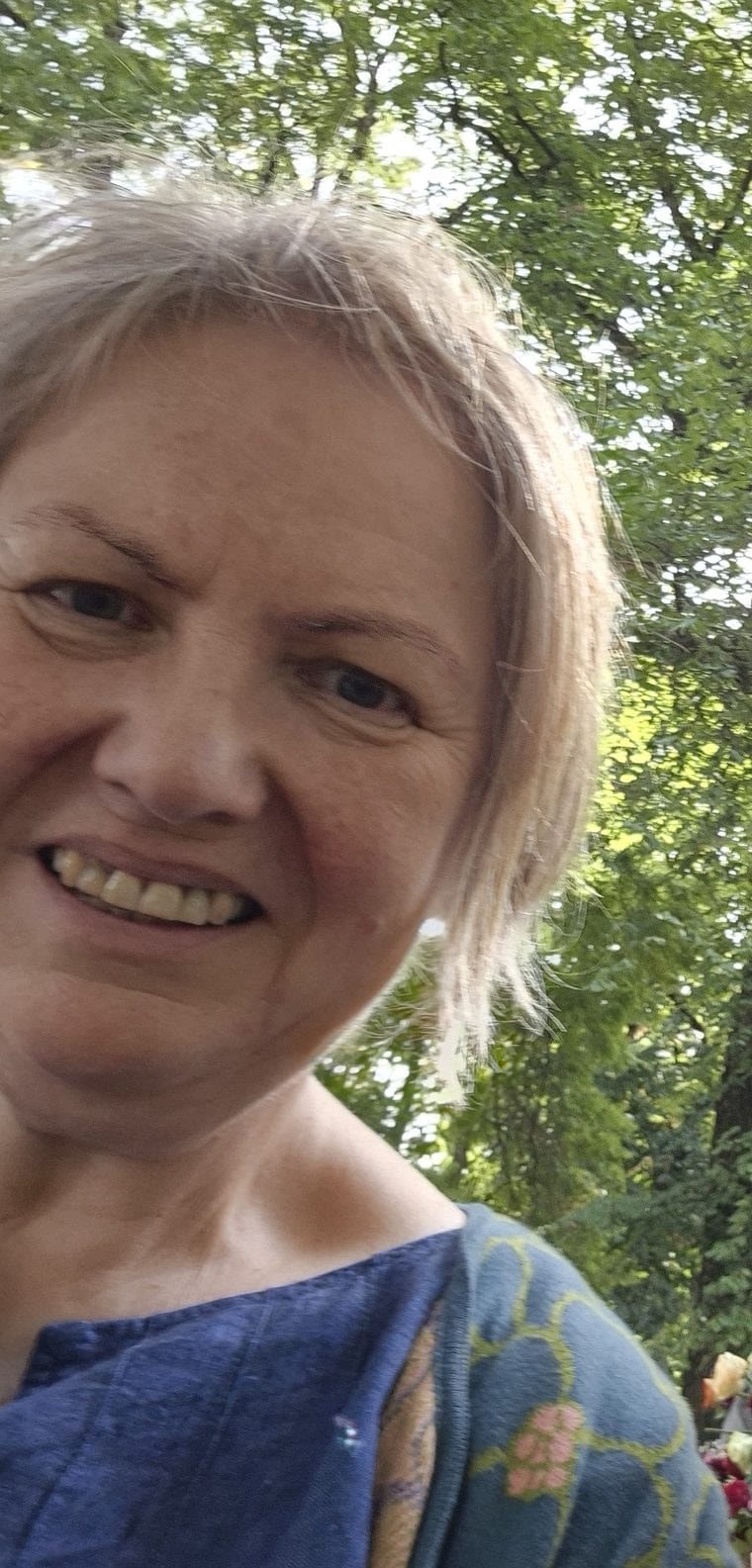
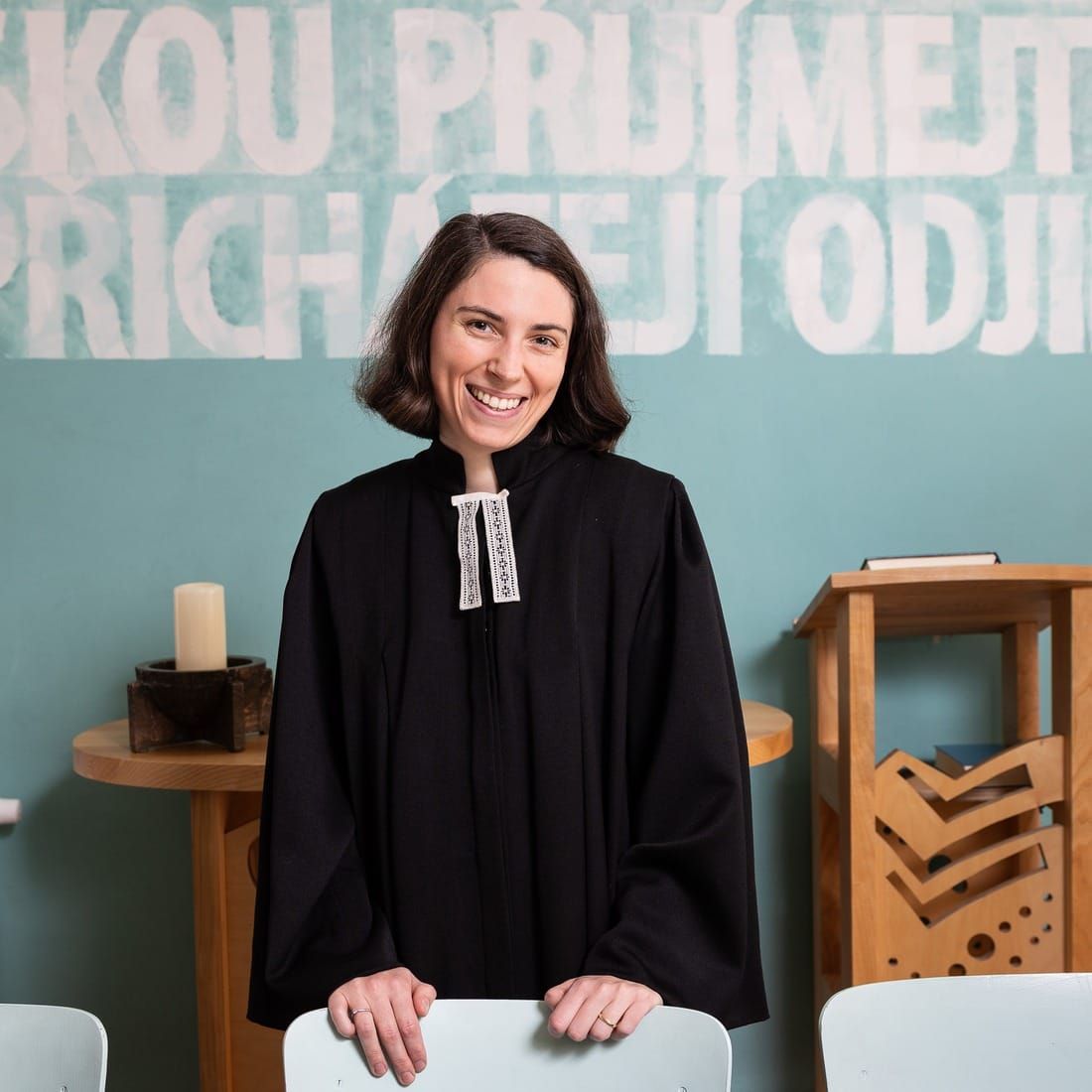
Eliška Vančová, pastor in Chrudim, the Evangelical Church of Czech Brethren. Photo: Univerzita Karlova/Michal Novotný.
Terskelen
Eliška is the first woman in this series who wanted the job as a child, and the first who is about to hand it over for three years while continuing to live in the parish house. Her account of ordination is unusually concrete: elected rather than sent, for a fixed term, by a congregation that can decide not to share the road once more. Her church has no bishops, one ordination, and no rule about who may receive it.
Eliška’s reading of Paul goes further than most in the series. She does not only place First Timothy inside its situation; she doubts Paul wrote it, and reads it as the work of somebody threatened by the power of widows in a congregation. On the creation account she does not argue that the order is cultural. She argues that order is not what the text is about at all: the passage answers Mesopotamia, and says the world is good rather than a punishment.
Eliška is also the only source in the series who has answered the editor's own questions back. Asked what preaching is if nothing we say is entirely true, she answers with semiotics: she interprets when she preaches, the listener interprets what she said, and the truth is grasped in the resonance between them. The creed expresses what she holds to be true. Asked what happens to the chain in First Corinthians eleven when one link is removed, she answers that there was never a chain. No human stands above another, and hierarchy comes from the abuse of power.
That leaves the sharpest exchange in the series so far. The objection from the other side is that Scripture exposes the cultural instincts we cannot see in ourselves. She grants the premise and turns it. Every reading is cultural, the traditional one included, so the question is which reading answers to the whole of the gospel. Her criteria are named, not asserted: the whole witness of Scripture, how Paul works with the gifts of the Spirit, the practice of the early church, and the fruit a reading bears in congregations.
One question remains for the editor. Those criteria are themselves read, and read by people inside a culture. She says that is not relativism, and she is right that it is not. What she has not said is who applies them when two churches apply them and reach opposite answers. The other side has the floor before we pass judgement.