Kvinnelige prester. Dialogen · Del 52
Heike Springhart leads a church whose leadership is half women. She says no to deleting the difficult passages in Paul, no to letting feeling decide, and gives one criterion instead: the direction of Christ.
Av Maria Solbak Årnes · Conversation with Prof. Dr. Heike Springhart, Landesbischöfin, Evangelische Landeskirche in Baden, Karlsruhe · 2 September 2026 · 10 October 2026
Heike Springhart took the call in the car, on her way to a meeting at eleven in the morning. She has led the Evangelische Landeskirche in Baden since April 2022, elected in December 2021, the first woman in the office. Her church is a united one, half Lutheran and half Reformed, with Luther’s catechism and the Heidelberg catechism side by side. She is 51.
She grew up in a small village in the Black Forest, surrounded by Catholics, part of the minority. She studied in Bethel, Leipzig, Basel and Heidelberg, took her doctorate and wrote her way on to professorial qualification with a book on the vulnerable human being. Three or four times she applied for a chair, without success. She still teaches every second semester.
Twelve years, then out
MARIA You have been bishop since April 2022. Can you run for a second term?
That is not possible in my church. The law says that it is limited to twelve years. It is not possible to run for a second term, which I think is a wise decision, because power has to be limited. And I think if you have done it twelve years, then it is also enough. It takes a lot of energy. I love it, but I think twelve years will be fine.
The answer defends the limit around the office, not the office itself. The law in Baden gives twelve years and no second term, and she calls the rule wise because power has to be limited. She says she loves the work, and in the next sentence that twelve years is enough. Neither half is taken back.
It is a wise decision, because power has to be limited.
The name sent in
MARIA How does a person become a bishop in your church, and when did the question of a calling come up?
The way to become a bishop is that they approach you at some point and ask you whether you would be willing to be a candidate. When my predecessor decided to retire, there was a call that every Christian in our region can name people who they think could be a good bishop. Then there is a committee of twenty people, most of them from the senate, and they have the task to find two or three candidates. A lot of people sent my name to this committee, and at that time I was not sure whether I would be willing. In the end we were two candidates.
When I was doing this process, when I was reflecting, could this be my way, am I willing to give twelve years of my life for my church, there the question of the calling came up. And at some point I thought, okay, if this is my calling, I am willing to do it. In the beginning I would not have expressed it like this. I just knew that would be the right way.
MARIA Why do you think they chose you?
That is complicated. I do not know. I think it was a mix. At that time I was a pastor in a parish, but before that I had worked for nine years in a house in Heidelberg where there were students and there were pastors for retreats. So I was sort of well known. During the COVID time I did video services with my brother, who is a professional movie maker. It was only fifteen minutes, professionally produced for YouTube. You can still find it. A lot of people watched that, and of course I did not do this in order to become famous. I just did it because I thought we have to do something. But that had the effect that a lot of people knew me.
It is always complicated to say it yourself. But I think it was the mixture. On the one hand I am a well trained academic theologian, and on the other hand, for a bishop, I am fairly young. I am still the youngest of the German bishops, and at that time I was 46. I am not so much in the cliche of, okay, we go through that, we will have this position as a dean and then you go to the next institutions. I always combine the academic work, international work and the work as a pastor, and I did some things that were a little bit unusual. So I think they had the idea that in these times of a transformation, that could be a fresh voice and a fresh face for the church.
And as I grew up in this very small village, from my upbringing I am not in this purely academic world. I am very down to earth. I know how to write books and how to do lectures, but I am also very down to earth, and that might be also a thing.
The calling did not come first. It came when she was asked. Eleven Norwegian women in this series have described a call that ripened over years before anyone said it aloud; Springhart reverses the order and lets the committee’s question come before the question of a calling. She uses the word only when she has to answer yes or no.
A close race
MARIA You are the first female bishop in your church. Was that a factor in the election?
I think that was also part of it, because of course I am the first female bishop in my church. When my predecessor was elected, ten years ago, there was also a female candidate, but they elected him. For some it was a factor, to say okay, now it is time that we have a woman in this position.
Although I must say, that is always an ambivalent thing. The other candidate was a man, and some people who were not so friendly tend to say, well, he has no chance, because there is this woman, and no matter whether she is competent or not, she is just a woman, so he has no chance. But in the end we were very narrow together. They elected me, but it was not that he had no chance. And I was glad about this, because it is a toxic argument that also weakens women, to say okay, you are only elected because you are a woman.
[…]
Here she turns the expected answer round. That the other candidate ran close, she counts as a strength for her own case. The argument that a woman wins because she is a woman, she calls toxic, and she says it weakens women, not men. A close result is her own defence against it.
The document she returned
MARIA How long has your church been open to women as pastors?
Legally it was in the end a thing after the Second World War. During the war there were a lot of women serving as pastors, because the men were in the war, and they were ordained. But after the war that was first taken back. So there was a phase where women were allowed to work as pastors and they were allowed to be ordained, as long as they were not married. Once in my parish I met an old lady. She was one of the first women who was ordained. She is now in her nineties. When she got married she had to send back the document about her ordination, and the church sent a letter to her and said, now you are married, and now you work as the wife of a pastor, but you will no longer be paid, and you are no longer ordained.
It is now 54 years that there is the full, fully legal identity of female and male pastors. At that moment, theoretically, there was also the way for women becoming a bishop, but it took a while until the first women were in leading positions, became deans and so on. The two bishops who were in charge before me were both focused on encouraging women to take on leadership positions. So right now we are in the lucky position that on the leadership level we are exactly fifty per cent women and fifty per cent men. If you look at the Protestant churches in the whole of Germany, that is not everywhere the case. There are still other churches where there are more men than women in the leadership positions.
The old lady in her nineties is the heaviest single image in the piece. She was ordained, she married, and she received a letter saying the pay and the ordination were gone. Springhart tells it without raising her voice. Then she gives the figure of 54 years for full legal equality in Baden, and half a century on, the leadership of her church is fifty and fifty.
Fakta
Evangelische Landeskirche in Baden. A united Protestant church, half Lutheran and half Reformed, based in Karlsruhe. Prof. Dr. Heike Springhart was elected Landesbischöfin in December 2021 and took office in April 2022, the first woman in the office. The term is limited to twelve years with no second term. Full legal equality of women and men in the pastoral office was resolved by the Landessynode in 1971. Sources: EKIBA.
The students and the texts
MARIA Do the students read the passages that are used as an argument against female priests?
Well yes, of course. They study theology, they read the scriptures in total. It is always a hermeneutical question how to deal with the different passages. It is not only this topic you have to deal with. How do we interpret it, how do we combine our current situation with specific passages in the scripture. Of course there are various ways how to deal with it. You can say it was not originally from Paul, which might be true. Or you can say there is a different social context, and it is a concrete conflict in the parish of Corinth where he reacts with this passage. These things are what students of course debate.
I do not think that the students in a theological faculty in Germany just take it for granted that there are female students and female pastors. Of course they debate it, but they do not fight on it. Sometimes old people also said to me, there is this sentence in the scripture and you should not be a pastor. But that is not the majority.
She takes none of the ways out. The text may be inauthentic, she says, or it may answer a concrete conflict in the congregation at Corinth. Of the first she says “which might be true”, and then lets it lie. The opposition has come from older people, not from the students.
Adam first
Tekstene det gjelder
1 Timoteus 2,11–13 (MANTELEN NT)
En kvinne skal lære i stillhet med all underordning. Men jeg tillater ikke en kvinne å undervise eller å utøve myndighet over en mann, men å være i stillhet. For Adam ble formet først, deretter Eva.
MARIA In First Timothy, Paul says that women should learn in silence and submission, and he reasons it from creation, that Adam was formed first. That does not look like a word to one specific congregation.
You can also argue with Paul for the relativization of gender issues. You have Galatians 3, where it says that in Christ the differences between men and women do not matter. You have First Corinthians 7, where it says that those who are married should live as if they were not married, because Christ will come back soon. That was Paul's idea anyway.
It is always problematic, and this is what I try to also tell students, to just take one passage and take it as, this is like a dogma, and this is what Paul said, and so we have to do this and that. Because it is always a broad picture. These are all texts, even if they are not explicitly written to Rome to say there is this problem, they are all written in a specific social and historical context. And the question is how, in all the ethical debates, we can use scripture, or be inspired by scripture, in a serious way, to open up freedom. It is a complicated thing. You have the same thing with the queer questions and homosexuality.
Here the reader has to see exactly what happens. Maria asks about the reason in verse 13, that Adam was formed first, and whether that reason does not reach beyond one congregation. Springhart does not answer verse 13. She sets Paul against Paul, brings in Galatians 3 and a word about marriage, and then moves the question to how one uses a single passage at all.
It is a real answer, but to a different question from the one asked. Four men in this series have built their whole case on verse 13, and the argument from creation still stands unanswered from this side. Springhart answers with a principle of reading. They answer with a sentence about Adam.
Stedene hun henter fram
Galaterne 3,26–28 (MANTELEN NT)
For dere er alle Guds sønner gjennom troen i Kristus Jesus. For så mange av dere som ble døpt til Kristus, ikledde dere Kristus. Her er ikke jøde eller greker, her er ikke slave eller fri, her er ikke mannlig og kvinnelig; for dere er alle én i Kristus Jesus.
1 Korinter 7,29–31 (MANTELEN NT)
Men dette sier jeg, brødre: Tiden er blitt kort. Det som gjenstår, er at også de som har koner, skal være som om de ikke hadde, og de som gråter, som om de ikke gråt; og de som gleder seg, som om de ikke gledet seg; og de som kjøper, som om de ikke eide, og de som bruker denne verden, som om de ikke brukte den fullt ut; for denne verdens skikkelse går forbi.
No deleting
MARIA Do you think there is a reason for these passages to be in the Bible today, or do they stand as a product of their time?
This is an interesting alternative. I think the Bible as a total, of course there is the canon that was done in the first centuries, and the Bible for me is a collection of scriptures that witness revelation, and witness experiences that people made with God, or with Jesus Christ, and their struggles, and how to live in the Christian faith. So I think that it is not an option to say, okay, we just delete those passages where we think they do not fit. It is just not an option. We have to interpret it, and we have to wonder, what is the purpose of that.
MARIA And what do you think is the purpose?
On the one hand there is not this one purpose. You have the whole range of this library that is the Bible. But I would say it gives witness of the revelation of Christ, and of God's story with the world and with humankind. And in the end it is a book that offers freedom. It offers freedom from sin, and also facing sin, or facing the dark sides of humanity, and says that liberation from that is not something we can do out of ourselves. That is what I would say.
This separates her from the easiest version of her own position. She could have said that the difficult passages do not belong in the Bible. She says no. The passages stay, the work is interpretation, and the question of the purpose is one nobody can skip.
It is not an option to say, okay, we just delete those passages where we think they do not fit.
Salvation
MARIA Do you think Jesus is the only way to salvation?
That is a difficult question. On the one hand I would say he is the way to salvation. This is what scripture says, that is his message, and I think that is part of the Christian belief. Whether it is the only way, I think this is not something we have to judge. He is the way I believe in. But I think part of the Christian belief is also the humility, that you know there is a truth that is not in my hands. The revelation is the truth of God, and in the end we will see what is true and what is not true. We do not own the truth. That is what I would say. For me he is the way to salvation, but other than that I do not have to decide whether he is the only way.
MARIA Do you believe in universal salvation, that everyone will come to God in the end?
I tend to think that God is as big and as gracious that this is true. So I tend to think that. But I also think, and this is probably new, that our eyes are open again for all the ideas of judgement and so on. Sometimes we thought this is ugly and that is bad and it is negative anthropology, but it also helps to deal with all the bad guys in the world, let's put it this way. It is not a cheap thing. I think in the end God created us, and Christ justified us to be free, and also to have salvation. But there is a way to that.
Jesus is the way to salvation, she says, and she is not to decide whether he is the only one. The reason is humility, not doubt. The truth is not in her hands, and what is true we shall see at the end. Then she leans towards universal salvation and at once puts in a limit: judgement helps against the bad guys in the world.
Feelings can lie
MARIA Some say you should use your feelings to decide when to interpret a passage and when to take it as it stands.
I agree, because then, if you take your feelings, you put yourself in the absolute position. And I think the biblical texts are also a critical mirror. So if you talk about these passages about women and Paul, then you can say, okay, the gospel aims at liberating people, or it aims at considering all human beings created equal, and then this cannot be the answer, to say okay, you have to be silent. So it is more that you have to argue for it. It is not just, does it fit to my feeling. That would not help.
If we consider human beings contested by sin, then my own feelings are always, of course sometimes they are right, and sometimes they tell me what to do and it is good to listen to them, but they can also lie. If a murderer says my feelings told me to kill my mother, then it is not a good idea to listen to his feelings.
Here she meets the classical side halfway. Several of the men in this series have objected that the case for women in practice lets experience become master over the text. Springhart says the same herself: take the feeling, and you put yourself in the absolute position, and the biblical text is a critical mirror. Then comes the example of the murderer.
They can also lie.
The direction of Christ
MARIA Might there be things in the Bible that feel wrong, or feel difficult, but still be true?
Well, you know the Bible is full of sentences. There is also a lot of violence. If you look at the Old Testament, and also the New, you have stories about violence, and you can say, okay, you can struggle with it. Or you can say there is a little minority that was always surrounded by enemies, so the idea of being strong was an idea of hope, but it was not a reality.
So I think it is hard to pick out single sentences and say, okay, this is true and this I do not choose. It is more about the general. So Luther always said, the question is what is the direction of Christ. That is the question. It is a question of content, not a question of sentences.
This is the criterion, and none of the eleven Norwegian women has given it to us so plainly. The question is not one of sentences, she says, but of content, and the measure is the direction of Christ, with Luther as warrant. The objection lies close by. Who decides the direction when two readers disagree about where Christ points?
Under one head
MARIA Submission is mentioned many times in the Bible, but it is never defined. What is submission to you?
That is again complicated. Submission is an idea that has to do with humility. It is not that one person can tell the other, you have to submit yourself under my feet. But knowing, or believing, that there is God above me means that. That is a sort of submission. It does not mean to make myself small or little, or to belittle people, but it means that there is something that is bigger than myself.
And that is an idea of submission which I think is fine, because it always says no to a way of telling people, or women in this particular case, you have to submit yourself under the feet of a guy, or under the feet of a sister. Because there is only one thing where our submission is adequate, and that is God himself.
Hodet i teksten
1 Korinter 11,3 (MANTELEN NT)
Men jeg vil at dere skal vite at Kristus er enhver manns hode, og mannen er kvinnens hode, og Gud er Kristi hode.
Efeserne 1,22–23 (MANTELEN NT)
Og han la alle ting under hans føtter og ga ham som hode over alle ting til menigheten, som er hans kropp, fylden av ham som fyller alt i alle.
MARIA Paul writes that Christ is the head of the man and the man the head of the woman. Is it a universal truth that a marriage is at its best when the husband leads?
I would say it is clear that Christ is the head of the church, and the church is Christ's body. So all the parts of the church and all the people have only this one body and this one head, and not one the head of the other, so to speak. So it equalises those who are under this head.
With the marriage, I think that in the Bible it is quite clear. On the one hand you have the old, so in the creation, in the first books of the Bible, in Genesis and so on, there is not the idea that one man has one woman. Our civilian idea of marriage is a modern development. And Paul, in terms of marriage, is very clear that it is better, so it is fine if you are married, but if you live married you should live as if you were not. That means for me that it should not bind you absolutely. It is a nice thing to be married, but it has nothing to do with salvation.
And I think that is the core of Protestantism, of Luther's development, to consider marriage a secular thing. It is fine that people are married. But this was his strife against the Catholic idea that priests are not allowed to marry. And I think there is something in it, to say it is nice, but it is just a secular thing.
She reads the head as one. Christ is the head of the body, and then all the members stand equal under the same head, none above another. Verse 3 of First Corinthians 11, where the man is called the head of the woman, she does not take up. Marriage she answers with Luther, as a secular thing.
What stands
MARIA Are there truths that will always be binding, that you can find in the Bible?
I think that has to do with what I already said. I think that one of the truths is that God has created this world, and that Jesus freed us from sin, and there is something beyond our world, and there is the Holy Spirit that keeps this world alive. And I think that goes through the Bible's texts.
The list is short and old. Creation, the atonement, something beyond this world, the Spirit that keeps the world alive. Nothing about the office, nothing about sex. That is her answer to what binds always, from a bishop who otherwise keeps almost everything open to interpretation.
Portrett
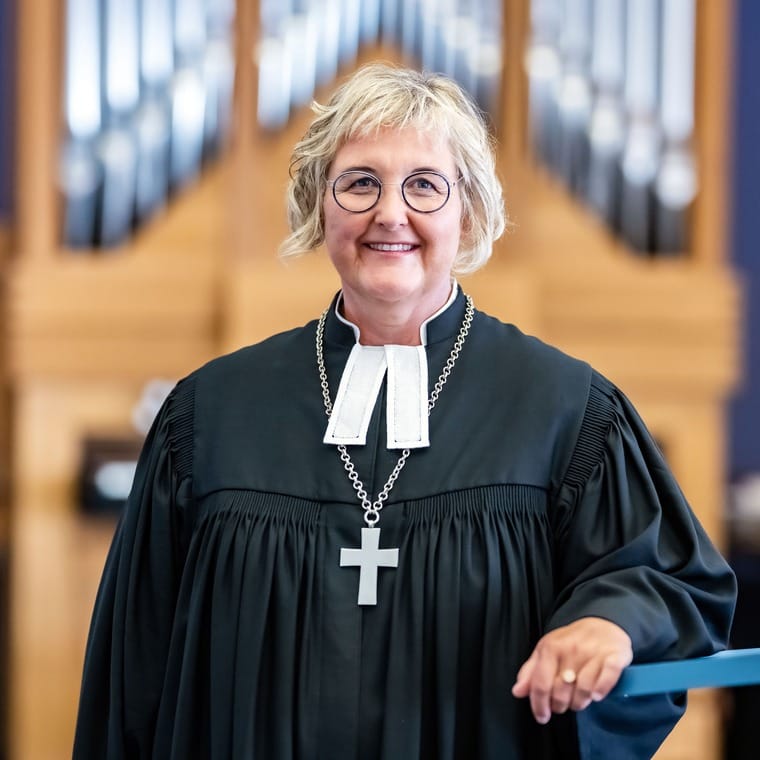
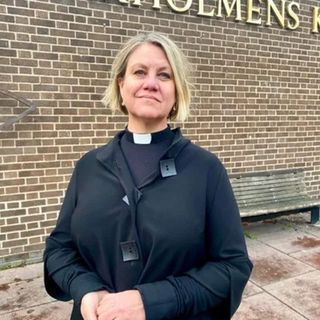
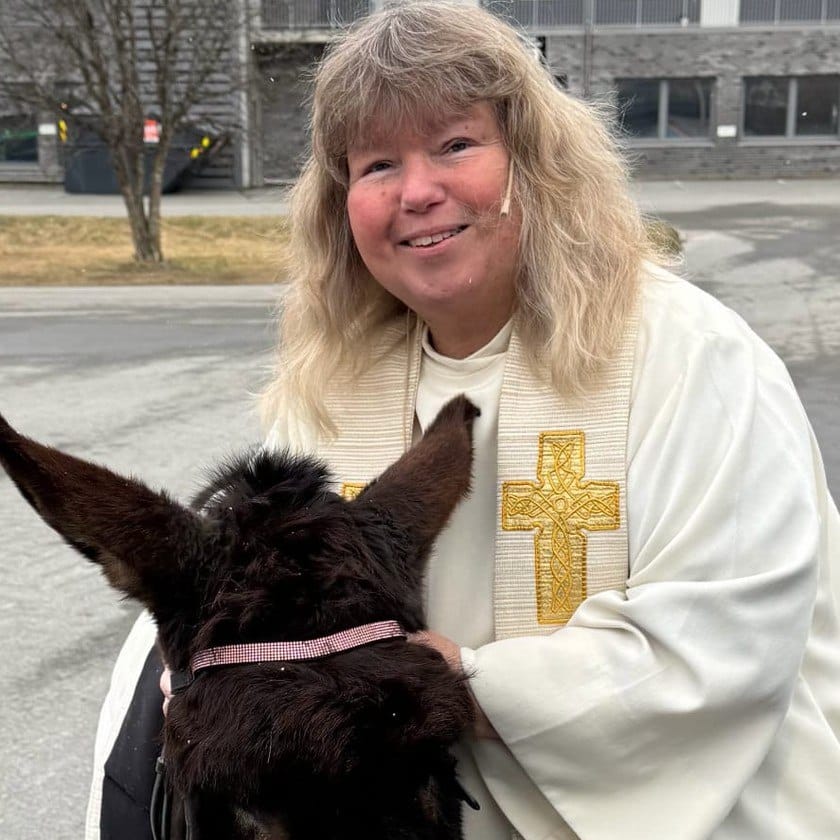
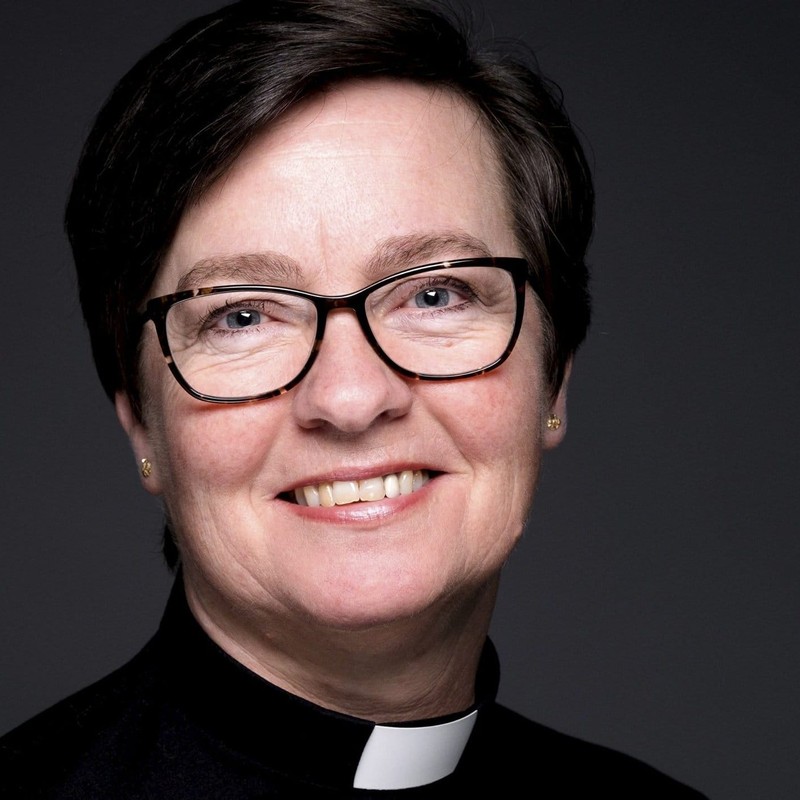
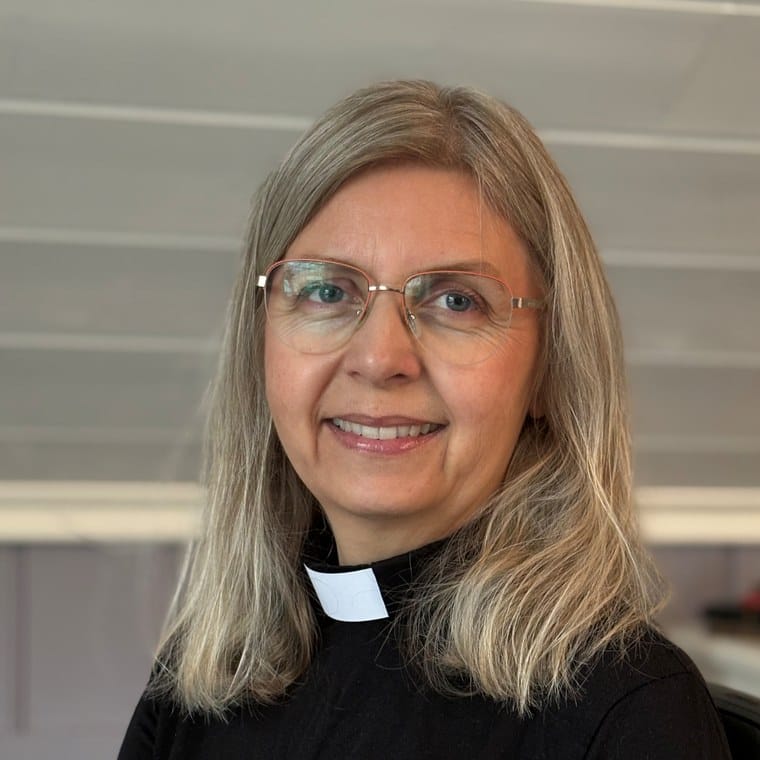
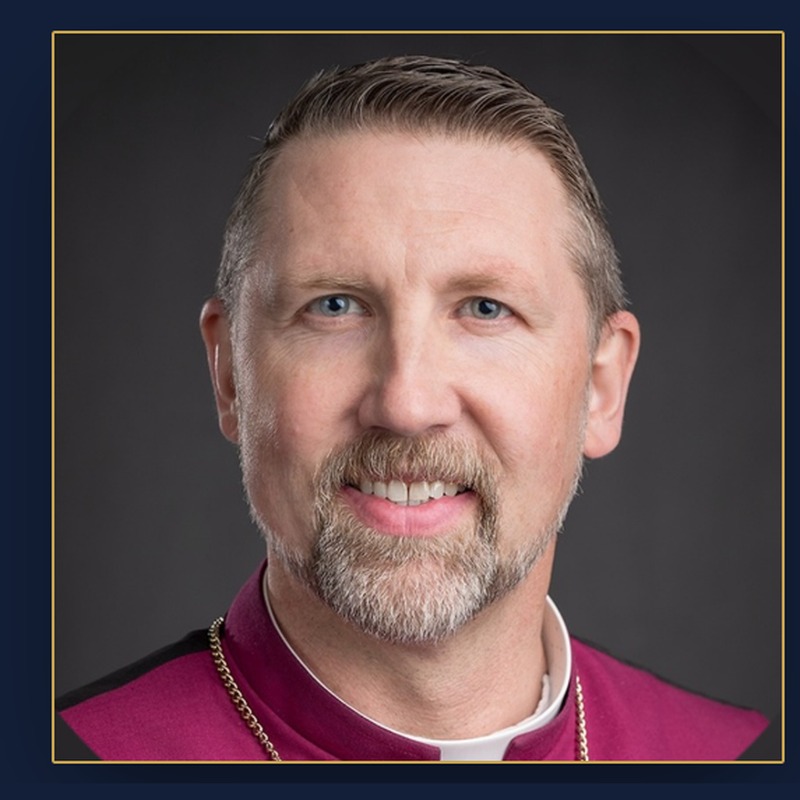
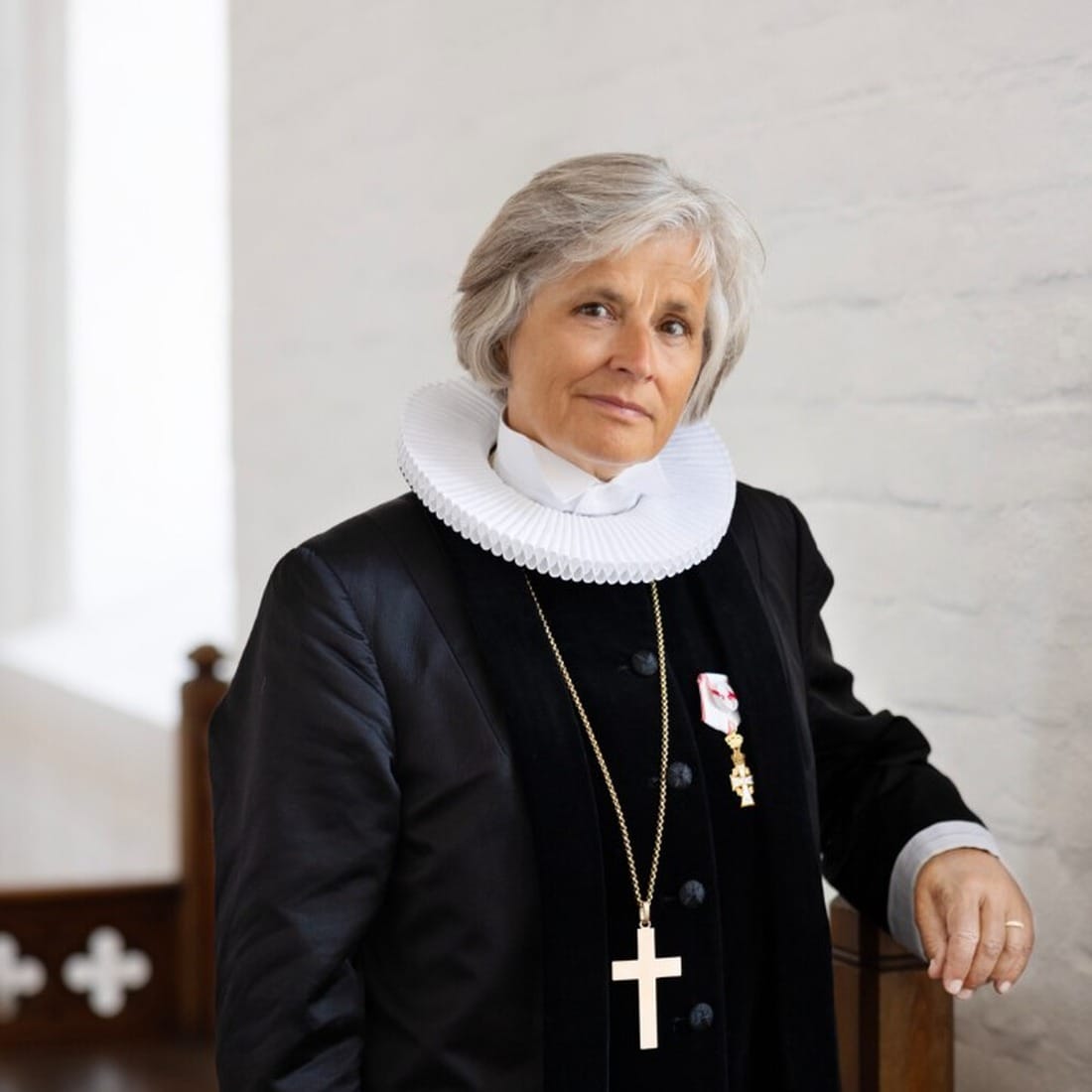
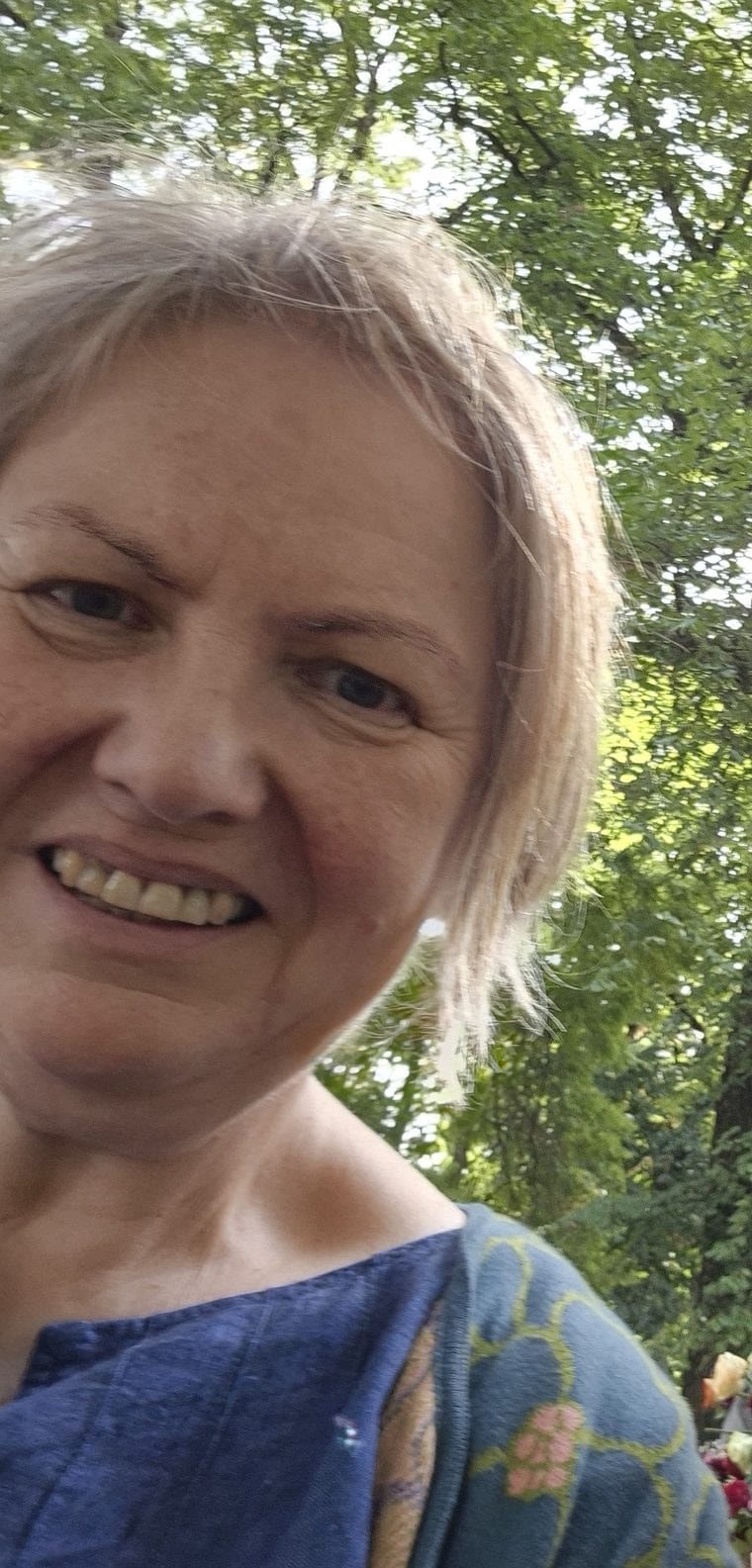
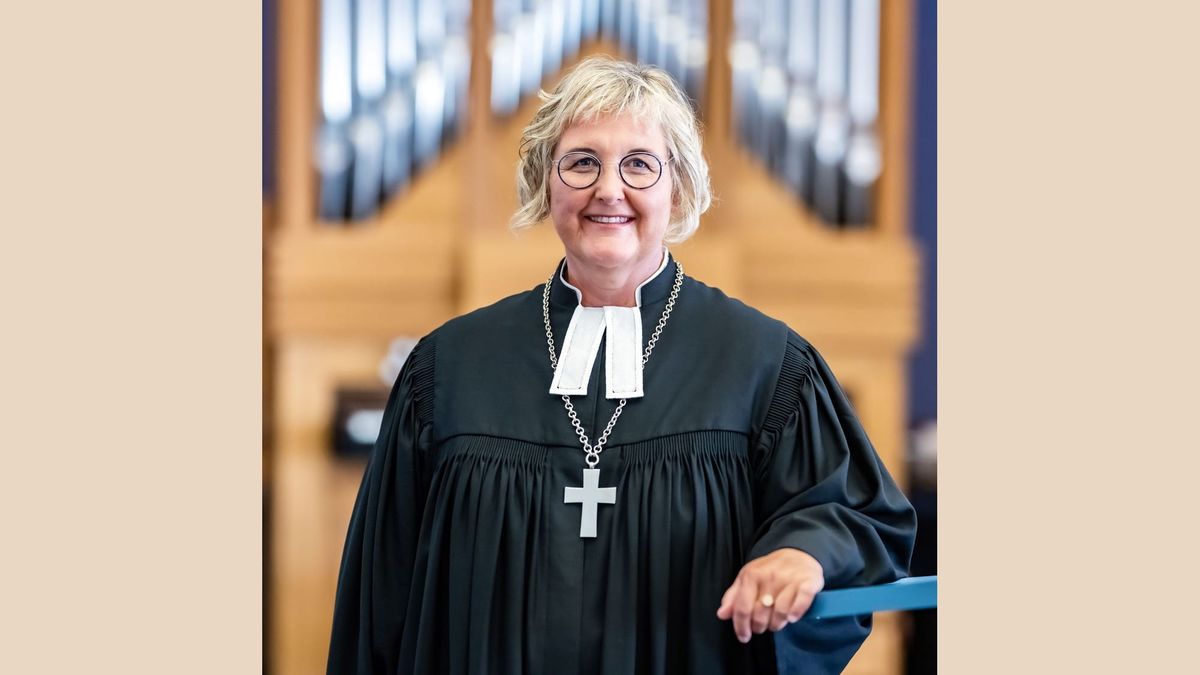
Prof. Dr. Heike Springhart, Landesbischöfin, Evangelische Landeskirche in Baden. Foto: ARTIS-Uli Deck.
Terskelen
Springhart refuses to delete the difficult passages, and she refuses to let feeling decide. That leaves one criterion: the direction of Christ. The series has asked eleven women where the line runs, and this is the clearest answer that has come. Now someone has to test it.