
Kvinnelige prester. Dialogen · Del 73
Pastor Hanna Paananen went to Sunday school in the Pentecostal church and studied chemistry before theology. Today she is a pastor at Rekola Parish in Vantaa, where she also leads an education team of eleven.
Av Maria Solbak Årnes · Written answers from Pastor Hanna Paananen, Rekola Parish in Vantaa, Evangelical Lutheran Church of Finland · 8 and 10 November 2026 · 11 November 2026
Rekola
MARIA Tell me a little about yourself. Where do you serve, and what does a typical week look like for you? How long have you been there? What do you enjoy most about that particular congregation or ministry?
My name is Hanna Paananen. I work as pastor at Rekola Parish in Vantaa. Besides the usual pastor work, masses, funerals and baptisms, I'm also responsible for leading our education team of 11 people. So, my typical week consists of funerals, baptisms, a mass and different kind of meetings with our staff. I was ordained 4,5 years ago and I have worked in Rekola almost for four years.
I feel that meeting and supporting people at church, in masses, funerals and baptisms are the most meaningful thing in my work.
Fakta
The Evangelical Lutheran Church of Finland decided at its General Synod in 1986 to open the priesthood to women, after earlier votes had failed to reach the required three-quarter majority. The first women were ordained on 6 March 1988. Source: Evangelical Lutheran Church of Finland, Women's position in the clergy.
From Sunday school to theology
MARIA Was faith part of your childhood, or did it come later? How did your family talk about God at home?
My childhood family was religious and faith was part of my childhood. I have visited Sunday school and clubs, summer camps etc. at Pentecostal church. Later, during my theology studies I became Evangelical-Lutheran.
For me, God was Heavenly Father to whom to pray and serve. He was loving, but sometimes I think that I needed too much to try to get His favour by trying to be nice and obedient.
MARIA How did you come to be a minister?
After high school I applied to study for theology, but I didn't get in yet. So, I studied chemistry for a while and after a few years I applied again and was accepted. I wanted to study theology basically for to understand Christianity better. Little by little I became more and more interested in being a minister and I did my studies so that I would be able to become one at some point. When graduating I was already pregnant and my husband was working nights and weekends, so I decided to be at home with the two kids for a while and study HR and leadership. Later I worked at the HR department of a missionary organization for many years. Then, when our kids grow older, I was able to start my work as pastor.
MARIA Do you remember when you first started thinking this might be something for you? Would you describe it as a call from God?
I think that I started to think about becoming a pastor while studying theology at the university and I know that it was God, who was planting the idea to my heart.
MARIA What made you sure it was God calling you?
I know that God was calling me, because He made the way for me. Everything was arranged so easily.
MARIA Did you ever wonder whether being a woman meant you could not become a minister?
As child I wondered, why all the church leaders and pastors were men. On the other hand, I understood that many missionaries were women and they served as only employees there. When I became Evangelical-Lutheran I didn't have many friends or people I knew, who would think that women can't be ministers.
After reading the first draft, she added this.
And actually, it really hasn't been an issue for me, if I can be a minister or not. I think that in our church other women have fought the fight long before me.
MARIA Can you tell me about an experience that made you think: This is why I am a minister?
I don't have a specific moment to think that this is why I'm a minister. But I think that at least every time I'm beside a coffin drawing a cross and blessing a person for eternity as well as in Sunday service behind an altar celebrating communion. And I feel very blessed to be able to do that.
The hardest part
MARIA What has been the hardest part of ministry?
Usually the most difficult part of being a minister is being away from my family on weekends and holidays like Christmas or Easter. My husband is also a minister, so we always have to adjust our schedules.
The most difficult task at my work has been a 7 year's old child's funerals. The parents were devastated and I just tried to keep calm enough to be present.
The Bible
MARIA What does the Bible mean to you? When you say it is the word of God, what does that mean to you?
It guides our lives and gives us understanding who God is. Bible is important to me. As child I read the Bible almost every day and I still remember much, even if I don't have time to read it every day.
MARIA What part do you think the Holy Spirit played in what was written?
Holy Spirit guided the writers to write about Jesus and the salvation etc.
MARIA What is your strongest reason for believing that women can be ordained ministers? Is there a particular Bible passage you would show me first?
Gal. 3:28. Also Junia was an apostle.
Tekstene det gjelder
Galaterne 3,28 (MANTELEN NT)
Her er ikke jøde eller greker, her er ikke slave eller fri, her er ikke mann og kvinne; for dere er alle én i Kristus Jesus.
MARIA Can you explain how that passage leads you to believe that women can be ordained ministers?
God uses both men and women.
First Timothy 2
MARIA When you read 1 Timothy 2, what do you think the author was trying to say to the people who received the letter? As you understand it, what were the women being told not to do?
Tekstene det gjelder
1 Timoteus 2,11-14 (MANTELEN NT)
En kvinne skal ta imot undervisning i stillhet, med all underordning. Men jeg tillater ikke en kvinne å undervise eller å utøve myndighet over en mann, men å være i stillhet. For Adam ble formet først, deretter Eva. Og Adam ble ikke bedratt, men kvinnen ble bedratt og er kommet i overtredelse.
I think there were women at that church, who were not teaching properly.
MARIA Do you think those who oppose women's ordination have misunderstood what the passage means? Or do you think it does not apply in the same way today?
I think that it does not apply in the same way today. The society and its rules were very different from ours. Today's women are smart, educated and independent. We do have the same qualities as men and we have strengths that today's churches need. It's good to have both men and women ministers.
MARIA Immediately after the instruction, it says that Adam was created first, and then Eve. How does the point about Adam and Eve connect with a woman not teaching a man?
The writer is trying to make his point.
MARIA Do you think the reason given about Adam and Eve also applied only back then? Why?
Yes. The way the church was organized back then gives us the context.
MARIA Have I understood you correctly that you disagree with the reason given in the letter itself?
We all have to be careful for teaching rightfully.
After reading the first draft, she wrote this about the reason from Adam and Eve.
I think that referring to Adam and Eve was given for a certain situation in that church, not for us to deny women to become ministers.
MARIA What do you think Paul wanted to achieve with this instruction? Is any of it still something we should care about?
The order at church is important as well as teaching rightfully.
MARIA How do you put that into practice in your congregation?
I'm studying Bible and context while writing my sermons as well as pray during the whole process, that the Holy Spirit would guide me and give the right words.
Reading the Bible
Today's women are smart, educated and independent.
MARIA How do you decide which parts of the Bible applied back then and which we should still follow? Could you give me one example of each?
For us Evangelical Lutherans the Bible is inspired when talking about Jesus and salvation. God has made himself known enough for us through the Bible. Joh 3:16 is inspired and some Old Testament passages are not.
MARIA Some believe women can teach and tell others about Jesus, but that being an ordained minister is a different responsibility. What makes someone a minister, beyond being good at preaching?
Nowadays ordination.
MARIA How do you test whether a calling really comes from God?
By praying and waiting for God to arrange the way.
MARIA Churches reach different answers. How do you decide which church is right on this question?
My church has accepted women ministers 40 years ago. I feel that it is my place to be.
MARIA What do you think the church should look for when deciding whether someone should become a minister?
Besides qualifications the right attitude to serve God and congregation.
By the fruits
The best leadership is not about power but serving your family or your congregation with your gift given by God.
MARIA Do you think God can also work through a minister who is wrong about an important issue?
Yes, we all are human and imperfect.
MARIA How do we then tell the difference between God working through someone and God approving of everything about their ministry?
By the fruits.
MARIA Apart from the good that happens, what else do we need to look at to decide whether the church is right about who it ordains?
How to interpret the Bible. I think that this question is not simple. For example, Roman Catholics do not ordain women and it might be right for them at this current situation as well as it is right at the same time for Evangelical Lutherans to ordain women. It also depends on how the church is organized.
MARIA Is there anything you believe the church should hold on to, even if most people think it is old-fashioned or wrong?
The salvation. You have to believe in Jesus and be baptized to be saved.
MARIA What makes that still apply, while the words about women's ministry belonged to that time?
It's about more relevant thing we are talking about.
Serving the family
MARIA What goes through your mind when you read that a woman should submit to a man? Do you think that has anything to say about how we should live today?
For me it's about mutual trust and understanding as well as about leadership skills in marriage. Sometimes a man is a better leader and can lead the family for the good future. Then it is natural for a woman to submit. In other cases, it might also be another way around. The best leadership is not about power but serving your family or your congregation with your gift given by God.
Portrett
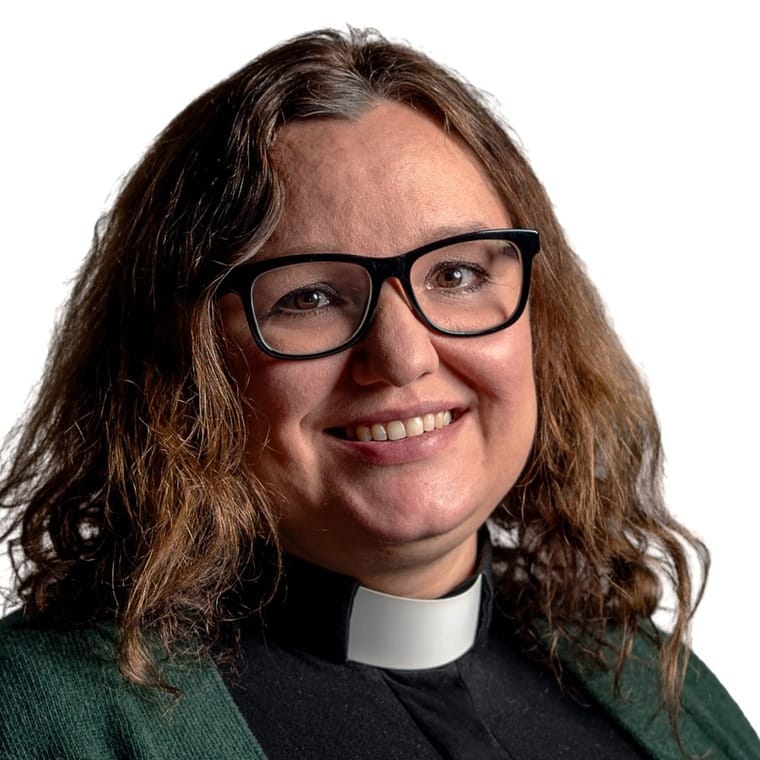
Pastor Hanna Paananen, Rekola Parish in Vantaa. Photo: Heikki Heikurinen.
Terskelen
Hanna Paananen went to Sunday school and summer camps in the Pentecostal church. She became Evangelical-Lutheran while studying theology, and the wish to become a pastor grew during those studies. First she stayed at home with her children and worked in HR for a missionary organization. God made the way, she writes.
She reads 1 Timothy 2 as written to a church where some women were not teaching properly. The reason from Adam and Eve was given for a certain situation in that church, she writes, not to keep women from ministry. The question is not simple, she writes. Rome may be right for its setting, Lutherans for theirs.
The editor takes one question with him. She writes that the writer gave Adam and Eve as his reason, to make his point. How does she see a reason drawn from creation belonging to how one church was organized? We thank her for sharing this with us.